Snowclearing policy and practice in other cities of Eastern Canada are nothing like St. John’s. Although the City’s website states, “our standards are like other cities with weather conditions comparable to ours,” this is not true. We are an outlier. What our own consultation found was that we have higher standards for streets and lower standards for sidewalks compared to other cities. And our sidewalk standards are not just a little lower, they are abysmally lower. While many other cities clear all or nearly all their sidewalks within hours of a snowfall, St. John’s only clears about 10% and it only does them within seven days, and maybe not even then if more snow falls in the meantime. Here are the details of what they do in some other cities:
Halifax
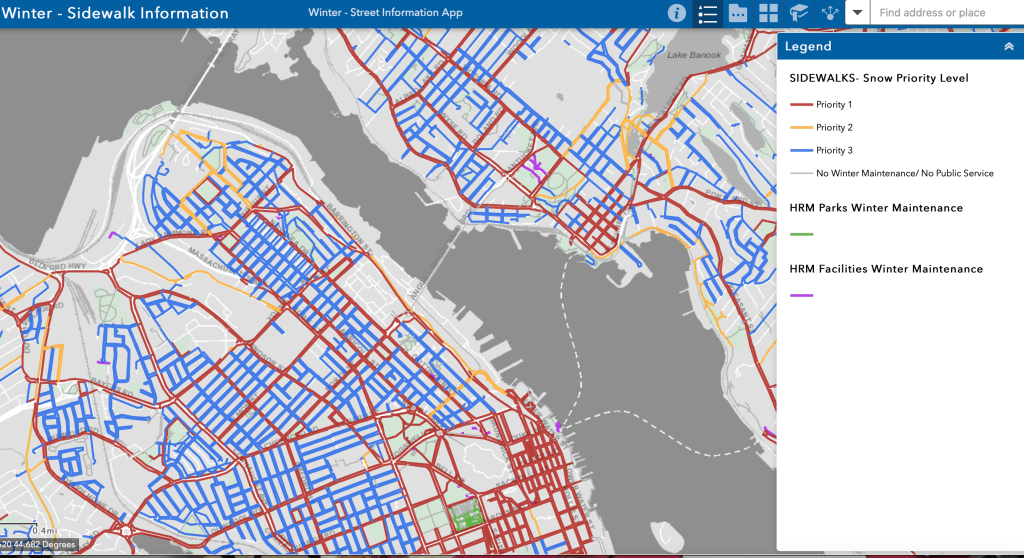
Of the five comparison cities in St. John’s’ own consultation, four aim to clear all or nearly all their sidewalks and the fifth has a goal of 62%. Not that other cities are perfect but at least they have higher goals and allocate more resources. People often compare St. John’s to Halifax so let’s start there. In terms of snowclearing, Halifax gets about half as much snow yet they invest about twice as much per km in sidewalk snowclearing. They also clear bike lanes with the same priority level as sidewalks: Priority 1 within 12 hours, Priority 2 within 18 hours and Priority 3 within 36 hours. They have a lot of the same challenges we do (hills, freeze and thaw cycles, old buildings and infrastructure) and were one of the comparison cities in the St. John’s’ 2014 snowclearing consultation.
Toronto

Toronto is a less obvious comparison than Halifax but it’s of interest because until recently the city cleared suburban sidewalks but not the downtown, on the grounds that downtown sidewalks had so many obstacles and narrow areas that plows couldn’t get through (an excuse we often hear in St. John’s). However, it changed its policy recently and now clears all sidewalks, with preliminary clearing done within about 13 hours and further clearing as needed over the next few days. They bought special small articulated plows that can get past obstructions. Areas they still can’t do are manually cleared.
Quebec City
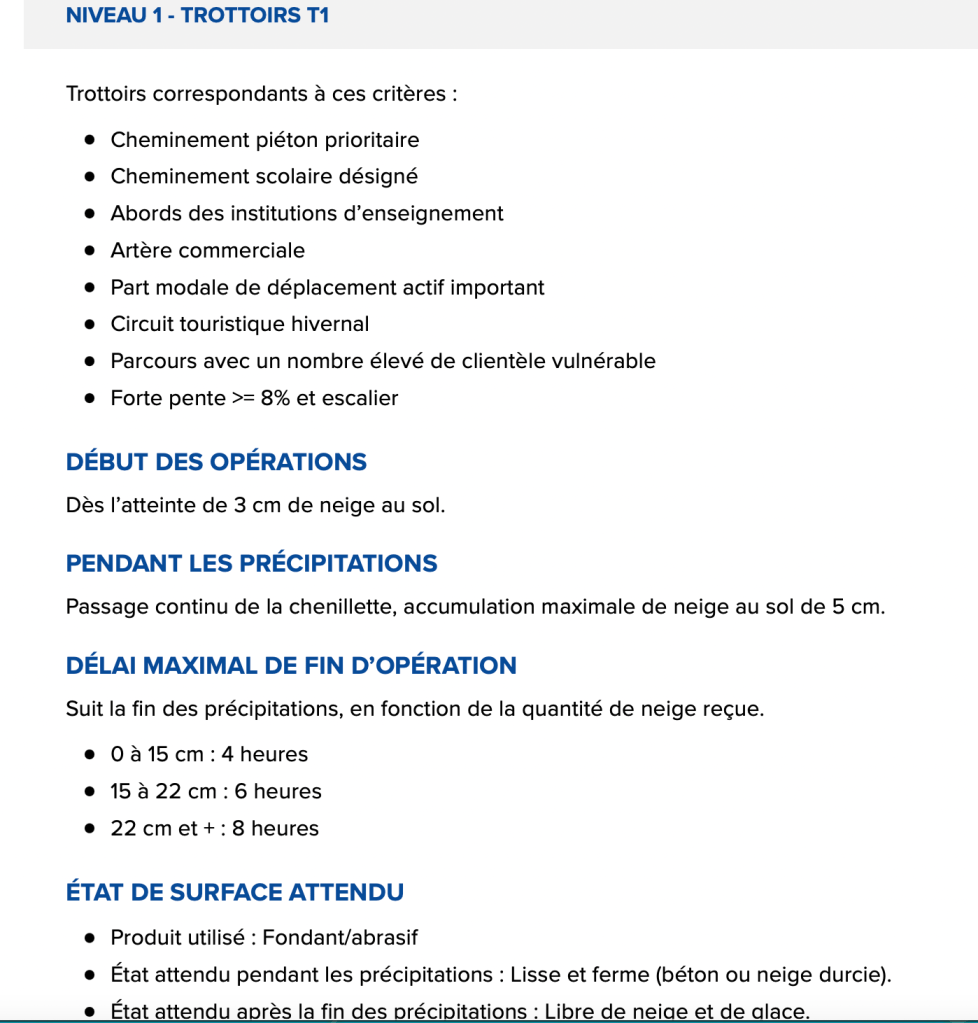
This is just Priority 1 (!) for Quebec City (also a comparison city in St. John’s’ consultation of 2014, with a similar snow load, many hills and narrow streets). Top priorities include school routes, designated active transportation routes, routes used by high numbers of vulnerable residents, steep streets and stairs, and tourist areas as well as main arteries. Note school routes, not just a drop off area in front of the school as in St. John’s. They plan for children to walk to school safely. They aim to have all Priority 1 sidewalks clear to bare pavement within 4 hours of 0-15 cm snowfall and 8 hours of 22 cm+ snowfall. Although these are their top priority, they also aim to have every sidewalk in the city done within the same timeframe, but to a lesser standard.
Moncton
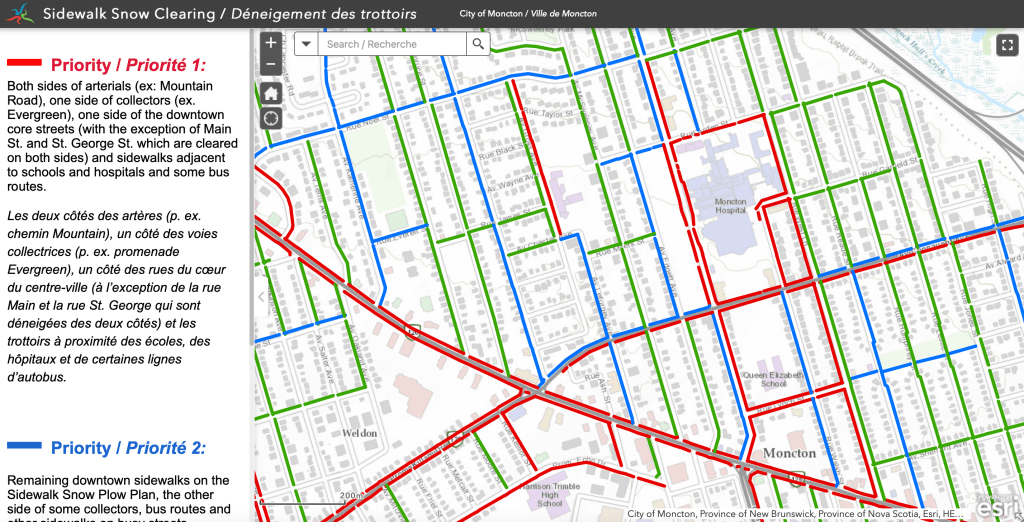
This is an enlarged section of Moncton’s sidewalk snow clearing map. You can see that they clear nearly all the sidewalks in the city. Moncton is a comparable size city to St. John’s with similar snowfall levels and plenty of freeze and thaw cycles yet they aim to have all Priority 1 sidewalks cleared within 24 hours and to finish all Priority 3 within 3 days. Priority 3 are residential and cul de sacs, streets St. John’s would never dream of clearing at all.
Waterloo
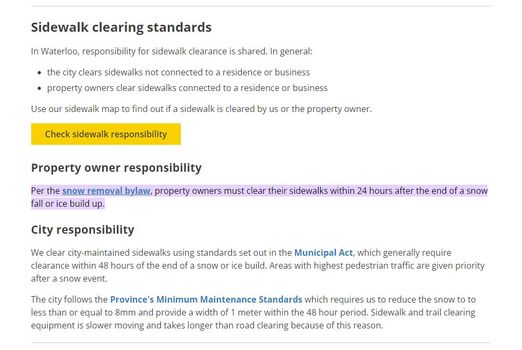
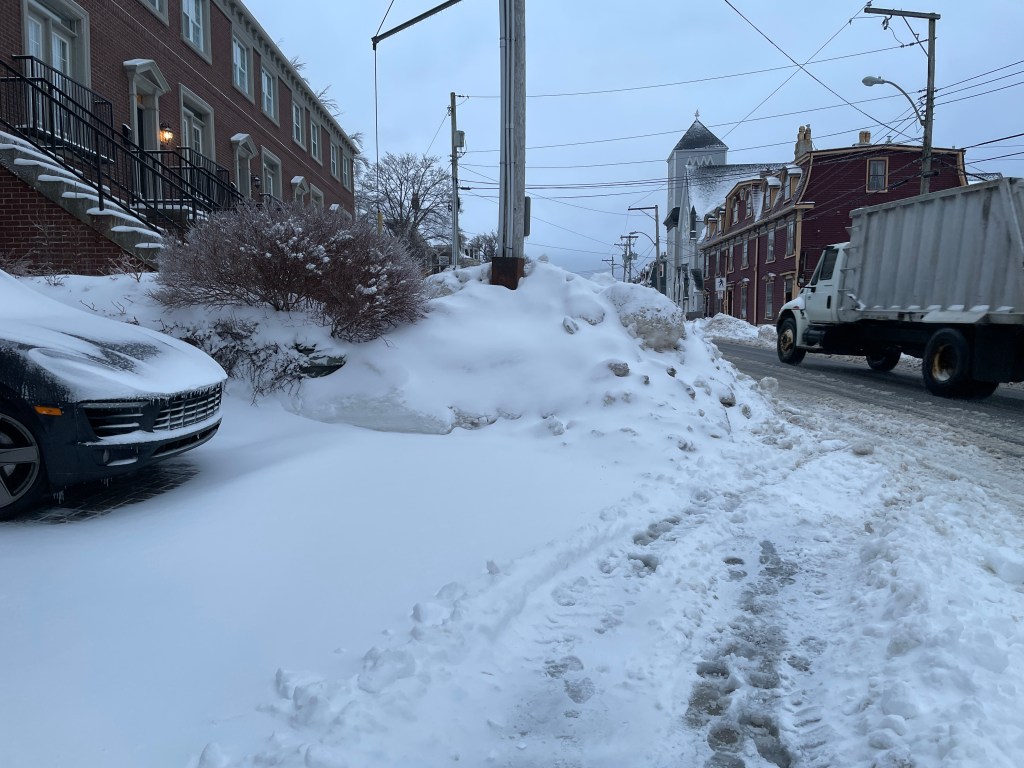
This post is a version of a thread I put on Facebook a few days ago. A commenter on the thread added the city of Waterloo with this image and statement: “I walked to work Friday morning near Bowring Park/Cowan Heights and the walk was disgustingly treacherous. I’m amazed the city has a timeline of 4 to 7 days. I looked up what my home city of Waterloo has as their timeline and their website states 24 to 48 hours which really isn’t that great even compared to some other cities. It made me really realize what I took for granted during my university years and this combined with the low-density living are big reasons why I am planning to leave soon.”
 Road Rage