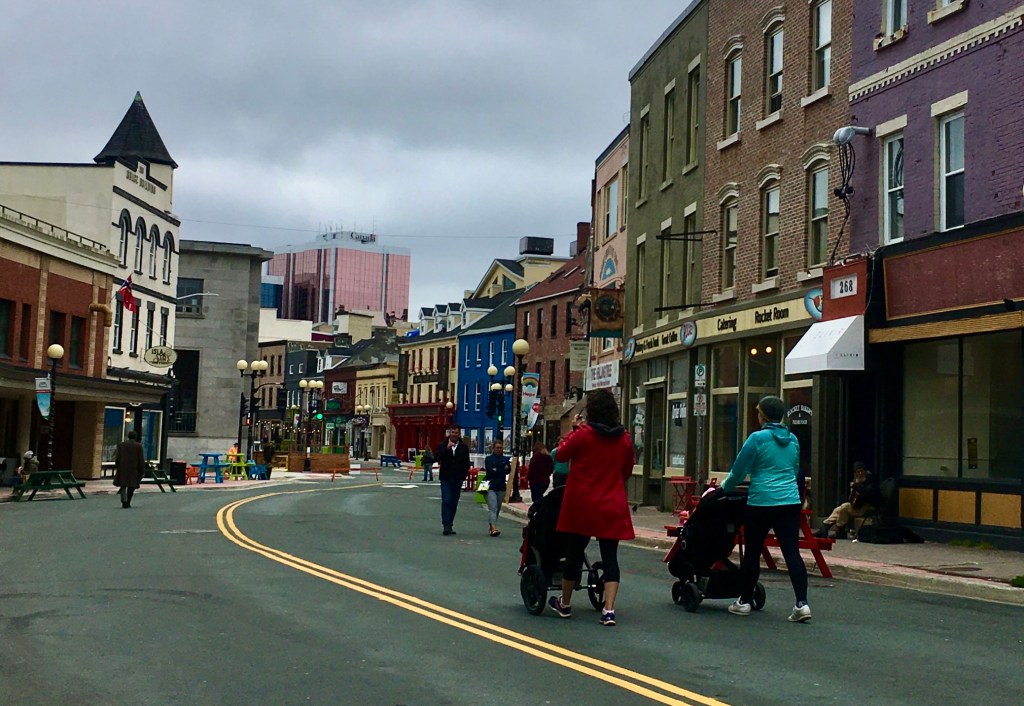
There’s lots of research to show that good public and active transportation infrastructure isn’t just good for our health and well-being, it’s also good economically, as shown by this study, this one, this one, and this one, as well as many more, including this one done right here in St. John’s, which found that a $3 million annual investment in improving walkability would bring economic benefits equal to four times that amount over a 10-year period.
So why don’t we just clear the sidewalks in winter, build the bike lanes (yes, we are building some and they are wonderful but we could do much more), provide incentives, and basically do everything we can to make it easy for people to get around without using private vehicles?
This article analyzes what the key barriers are. To summarize, there are four of them: 1. Social and equity dimensions of health is not nearly as well understood as physical and mental aspects; 2. Evidence is often inaccessible due to paywalls and overly technical language of reports; 3. Fragmented, siloed governance and limited powers of municipalities (for instance, one problem here is that much of the expense of infrastructure and maintenance is municipal but the resultant financial savings in healthcare are provincial); 4. Conflicting ideologies (for instance, engrained car culture).
What to do about these barriers? The article is good in its analysis but a little brief on what to do. noting simply that understanding barriers is the first step and thet we then need to foster collaboration, restructure governance, empower local governments and promote a collective mindset. How to do these things is a big question but I thought the article was worth sharing because it does explain the barriers clearly and succinctly.
 Road Rage