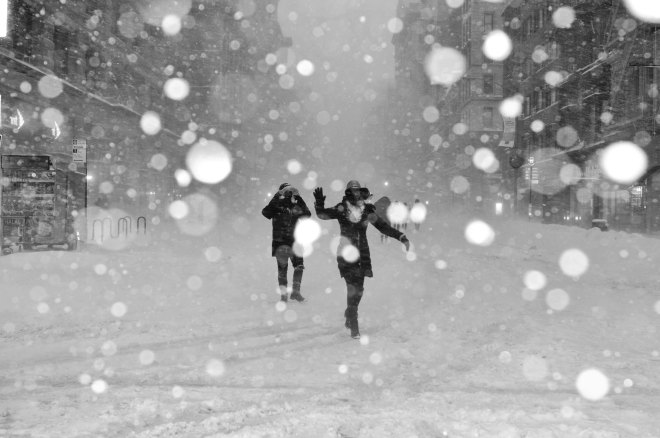
Mean Comments on a Pedestrian Injury

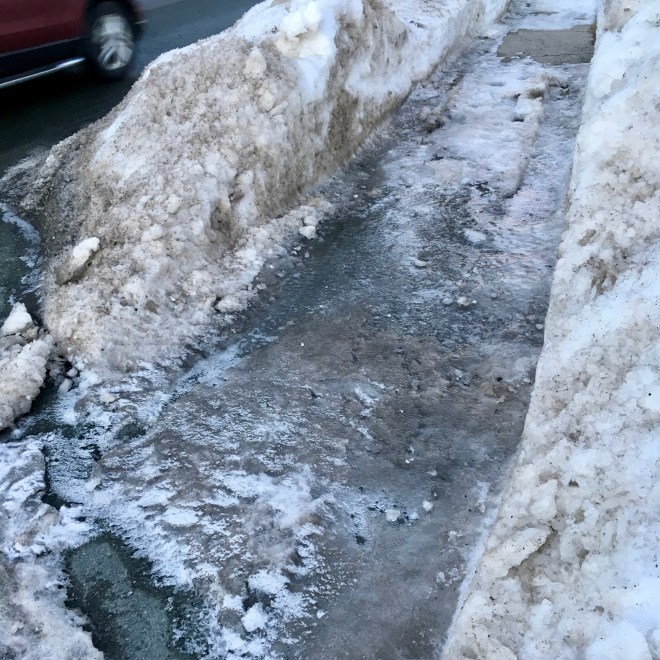
IMG_3407

Earlier this month, Steph Power was on her way to get the bus to work. She was crossing Barter’s Hill to a cleared sidewalk on the other side when she slipped on black ice, fell and broke her ankle. These facts have been recorded in a CBC article by Andrew Sampson. What I want to talk about here is the comments people left on the article. Steph will probably be unable to work at her job as a baker for the next two months and has experienced a lot of pain. You’d think people would have some sympathy for her. You’d also think they might wonder why it wasn’t safe to walk on a Priority 1 street. But the conversation was almost entirely about how she was wearing “hipster footware,” how they personally made better footwear choices, how there’s “always plenty of salt on that street,”  “slippery roads are a fact of life” and “there’s no way the City can keep everything cleared in winter.”

It’s always interesting to compare the way vehicle drivers and pedestrians (and their rights) are discussed. If a driver was badly injured, would all the comments be about what kind of tires they had, why they didn’t look more carefully to see if there was black ice on the road, and “too bad, it’s winter, what did you expect”? If the City suggested that some streets couldn’t be cleared and salted for cars because “there’s no way the City can keep everything cleared in winter” would that argument be accepted?

One commenter did point out that “Barters Hill is a priority one street [and] this city is well known for poorly clearing and salting sidewalks” and a couple more expressed sympathy but the large majority of the thirty-three commenters seemed oblivious to the idea that pedestrians might have any rights or that walking safely (unlike driving) is anything but an individual responsibility. I went back later to post a supportive comment but comments were closed.

I decided to have a look at some CBC reports involving vehicle crashes in winter to compare comments on them to the ones on this article. To my surprise, none of the articles I looked at allowed comments. That leaves me wondering why this story did allow them, leaving an injured pedestrian open to the mean self-righteousness of anonymous readers. Does anybody have an answer?


Meanwhile in Other Cities: Another Look at Moncton

I know I’ve written quote a lot about Moncton and I may have seen it (or at least its sidewalk snow clearing) through rose coloured spectacles. So, for the record, this satirical piece in The Manatee suggests that winter walking still isn’t quite perfect there.

“Removing the sidewalks and widening the streets will give people a better place to walk, and actually save the city money in the long run. Sure, there might be a slight increase in deaths from vehicle-pedestrian collisions, but way fewer injuries from falls and sprains. Premier Higgs told me the province will even help fund the work, because it will save the health-care system so much money.”

Isn’t there a double standard here?

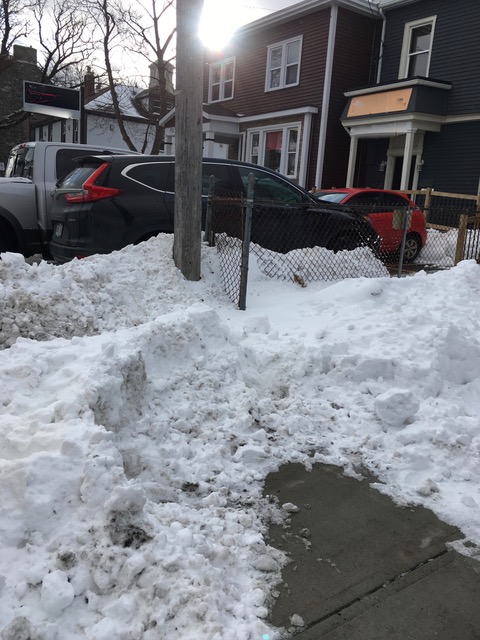
IMG_3491

We’re doing better at making the city safe for pedestrians. We really are. This sidewalk was plowed by the city within hours of the end of the snow storm on Monday. Then all this snow was dumped back on it to create private parking. Isn’t this against the law? I hid the names of these businesses because I’m not trying to target them specifically. Hundreds of businesses and homeowners do this. If it’s illegal to have a basketball net on a sidewalk in a cul-de-sac in summer, how can it not be illegal to do this in winter?

The law cited in the basketball net story was Section 149.1 of the St. John’s Act , which states:

“Penalty for obstruction
149. (1) A person shall not, within the city limits place or deposit on a street or sidewalk, except in transit, boxes, barrels, packages, or other matter or thing, so as to obstruct free passage on the street or sidewalk.”

Meanwhile, Matt Milner from the St. John’s Winter-Unfriendly City Facebook Group pointed out that there are also laws specifically about not putting snow on plowed sidewalks so the answer to my question above is yes, it is illegal. Even though it’s a different law, it’s still a striking contrast to the response to a very minor sidewalk obstruction in summer. Does anybody know how often this law is enforced? Here’s the relevant section from the St. John’s Snow Removal Regulations:

7. (1) No person shall deposit snow or ice upon any street or sidewalk which street or sidewalk is cleared of snow or ice by the City.

(2) Any cost to the City of removing snow or ice deposited in violation of subsection (1) shall, in addition to any penalty prescribed hereunder, be recoverable from the violator or abutter.

8. (1) No person engaged in removing snow or ice from any property or other premises shall do so in any manner that obstructs vehicular traffic on a street or pedestrian traffic on a sidewalk.

(2) Any cost to the City of removing snow or ice deposited in violation of subsection (1) shall, in addition to any penalty prescribed hereunder, be recoverable from the violator or abutter.


Participatory Budgeting

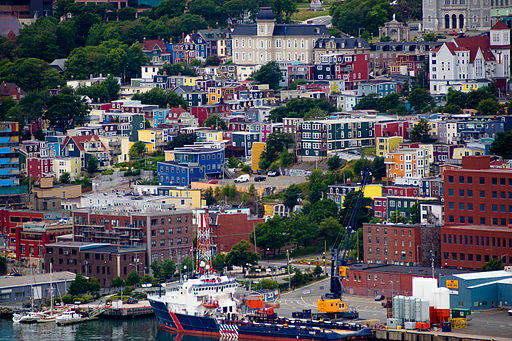
512px-Jelly_Bean_Row_(7701369614)

Photo: Kenny Louie from Vancouver, Canada [CC BY 2.0 (https://creativecommons.org/licenses/by/2.0)%5D

One reason I’m interested in municipal politics and activism is the seeming impossibility of making a real difference at the national level. Cities and towns seem to be taking the lead in making real change, especially in sustainability. It’s not that we shouldn’t pay attention to what’s done nationally or provincially, of course, but one of the ways smaller scale activism can make a difference is by experimenting with new approaches that might later be implemented on a larger scale if they are successful.

This review of Yves Cabannes’ edited book, Another City is Possible with Participatory Budgeting (2017, Montreal, Black Rose Books) suggests that participatory budgeting can make a real difference. When citizens have their say in developing the city’s budget, good things happen: things like community gardens and markets, accessible public space and equitable development. The book offers examples from around the world, including one from Chengdu, China, which I’m especially interested to read since we’re not used to thinking of China as a bastion of democracy. Apparently, the book is “the first in a series of books that aims to stimulate collaboration between various forms of emancipatory collective action at the municipal level.”

I’m off to order a copy of the book and would love to hear from anybody else who wants to read or has read it. I’ll also post a review later for the first in what I hope will be a series of book reviews.


A totally different story: Winter walking in St. John’s from an international student’s perspective

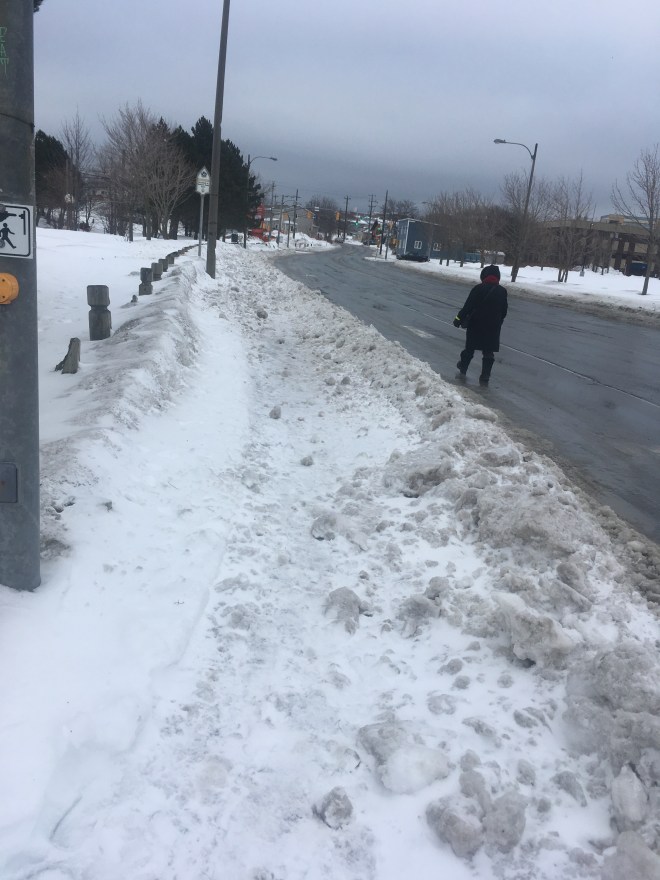
IMG_3507

Photos and story by Bahar Haghighat

I decided to write about this after reading Dr. Boon’s post on sidewalk clearing in Halifax. Before that, although I was aware that sidewalk cleaning in St. John’s is terrible, I thought that I shouldn’t complain because maybe that’s how it is supposed to be. It’s Canada. A cold country, with long winters and a lot of snow. When I decided to move here, I resigned myself to the fact it’s a terrible winter, but who am I to criticize when I haven’t lived here even for a decade yet?
Before coming to Newfoundland and Labrador, I had read somewhere that St. John’s is one of the most walkable cities in Canada during winter because the weather is cold, but not unbearable. And I have found it’s true. It’s been four years since I’ve arrived and, aside from those super windy days, you can walk easily if you dress properly and if the sidewalks are clear.
As an international student coming from a sunny country, it’s a challenge to survive winter here. As a grad student, it’s even more difficult to survive both grad school and winter together. At school, we discuss mental health a lot. We talk about its importance, about ways we can take care of our mood, and about how to avoid depression – especially during the long winters we experience here. We’re advised to take vitamin D, to eat properly, and to be physically active. I’m not going to talk about the accessibility of “healthy foods” here: both in terms of cost and availability, or how considering students responsible and accountable for their mental health is problematic, those are totally different kettles of fish. But I do want to talk about walking, which is considered an easy, cheap and (for myself) mind-stimulating physical activity. Walking invigorates my thinking, especially after finishing a book or an article related to my dissertation. Some of my best writing has happened when I spent time thinking and planning while wandering aimlessly through the city.
When I first moved here, (I was lucky to start school In September, can’t imagine how students who start in winter manage!), I remember walking for hours during my first month to get a sense of this place. I was amazed not only by the beautiful fall that we have here, but also by looking at colourful houses with their completely foreign architecture that I had only ever seen before in movies. By walking I’ve been able to better understand St. John’s. In little details like whether people are willing to talk to strangers or not. I was once invited to have tea with an elderly lady who was sitting on her deck and saw me walking, looking curiously at everything. I was surprised to learn that it’s not unusual for people here to keep their apartment curtains open, something that is not common back home. Walking helps me to discover cafes, bookshops, and restaurants. Walking helped me to get familiar with a new environment and to feel less afraid of being in a new place. It helped me to gain a sense of belonging during those first beautiful fall days.
But the reality is that, in general, walking in St. John’s isn’t easy. The city structure is not welcoming to walkers – at least not after growing up in Iran where the cities are full of lights, pedestrians, and spacious sidewalks that invite you to walk for hours. During fall and summer, the St. John’s weather can be beautiful and the environment can motivate you to venture outdoors – but winter is a different story. I don’t walk a lot in the winter; I’d say I don’t walk at all. When you are an international student living alone, you need to be more cautious about every single step you take in a new country. You don’t have the same social supports anymore and you try your best to avoid any complications. People tend to think of international students as adventurous people, risk takers who left their home and moved to a new country to study. People who have known me might agree with the description, but I do everything I can in my daily life to avoid risk. For many people, the commute to school requires little thought, it’s routine. But it’s not for me! In the winter, every day I have to decide if I want to walk to school or not. One of my nightmares is slipping and hurting myself. I imagine myself slipping and falling, and worry that nobody would be there to help me because nobody walks in this city of cars! I envision lying there for hours before I get help, probably by calling 911 myself; I would end up going to the emergency room which would probably take my whole day, and I might suffer a concussion, a broken hand or leg. And then I get panicked. I have no family here. Who would help me with cooking, with transportation, with bathing! I probably wouldn’t even tell my mom to save her from worrying while she’s two oceans away. After overthinking all of this, I end up taking a bus to go to school – although I live close to MUN, although I need to walk for the exercise, although I prefer to save my transportation fees. In fact, taking the bus is a risky process itself when there is no real, clean shelter at my bus stop and I’m forced to stand in the street, asking God to save me from being hit by a car until my bus arrives. That’s not to mention getting splashed by cars racing past which is not helpful when it results in a filthy outfit en route to a job interview, or the angry comments from some drivers complaining that I’m walking on the street, seemingly unaware that I am just as unhappy as they are that I had to choose between a sidewalk full of snow or a street that may have black ice. I could also mention the problems with public transportation here in general, like the times that my bus arrives ahead of schedule and I have to watch it drive away while I’m not quite close enough to catch it, but again, public transit is a whole other story. As for walking in St. John’s, I certainly won’t be highlighting the city’s “walkability” in winter when people ask me how life in Canada is going!


Priorities, plows and gender equity

Did you know that three times as many pedestrians as drivers are injured in accidents caused by slippery conditions? Or that most of those injured are women? Is it a conspiracy or…? Have a look at this short film from Sweden to find out.

How do the priorities here compare to priorities for snow clearing where you live? Have a look on your community’s website and let us know in the comments.

A Radical Suggestion

jeffrey-blum-399705-unsplash

Photo by Jeffrey Blum on Unsplash

What if we banned or strictly limited cars in city limits? I know this seems like a very radical suggestion here in St. John’s but many cities have done it, for example Zurich, where 32% of people get to work by transit and 42% on foot or bike and Copenhagen, where people protested, “We’ll go broke, and the weather’s too bad for people to be outdoors” but ended up loving their car free city. Our weather is worse and we’re probably broker but wouldn’t we actually save money if we only had to plow the sidewalks and bike trails, and a single lane in each direction on bus routes? We could use that money to get more buses and build more bike and walking trails.

What else might we gain if we did this? We’d be safer, for one thing. Canadian road fatalities fell 15.2% between 2010 and 2016 but pedestrian deaths increased by 10.5% in that same period (source). Newfoundland and Labrador have the fourth highest rate of pedestrian fatalities (7.9 per 100,000 population) and the second highest rate of pedestrian injuries (624.4 per 100,000 population) (source). Removing cars would drastically lower these figures. We’d also be healthier. It’s well known that regular walking lowers the risk of heart attack and stroke as well as having many other health benefits. Walking, cycling and public transit use can all be key to preventing premature deaths and diabetes. There are also links between getting around without a car and mental health and happiness. Interestingly, this includes not only active transit but also public transit use. So, while it might take longer for emergency services to reach us if only main bus routes were plowed, most of the province already has to wait longer for those services and, on the up side, we’d have much less need of them.

I’ll continue to explore this topic in future posts but would love to hear from you in the meantime. What do you think?


Are we getting better?

I’ve been meaning to post a link to the video Sharon Roseman and I made about sidewalk snow clearing. Most of the filming was done in 2014, just before the KPMG Review of Winter Maintenance Services in St. John’s, so the film turned out to be kind of a benchmark for what things were like before the city started implementing the recommendations of the review. It also documents the activism that led to the review. Here it is:

Honk If You Want Me Off the Road from Elizabeth Yeoman on Vimeo.

And here are a few of the review recommendations, mainly the ones relating to pedestrian needs, and my brief comments (in blue) on how they’ve been implemented since the review:

-Sidewalk service levels should be improved by starting earlier and focusing on high priority sidewalks.

(Much of the recent $150,000 increase in the snowclearing budget was to allow for an earlier start to sidewalk clearing. Snow removal crews are also working seven days a week instead of five. My own experience is that this is happening after lighter snowfalls but not so much after heavier ones, when drivers of motor vehicles are still given priority over pedestrians. We need much more discussion of what the word “priority” means.)

-Snow removal should start earlier during snowfalls to improve sidewalk and road conditions, using privately hired equipment (trucks and loaders) to expand capacity during major events.

(This year an additional 11 km of sidewalk snow clearing is being done by sub-contractors, which is intended to help city staff get the rest cleared sooner.)

-Seasonal workers should be engaged for a longer season (18 or 19 weeks, instead of 16 weeks) to provide resources for early or late storms; the city should also allow more time for training early in the season.

(If this has been done, I haven’t seen it published anywhere.)

-The training program should be expanded, focusing on improving effectiveness, reducing equipment damage and improving supervisory skills with three new seasonal trainer positions.

(I haven’t seen any information published on this either. What I have seen is a lot of “duelling plows,” as Sonja Boon calls them, where the street plow drivers plow the sidewalks back in after the sidewalk plow drivers have been through. Surely this could be avoided with better training.)

-A revised protocol for handling 311 calls on snow issues should be developed and external communications improved.

There’s a new app that allows people to report in detail on snow issues. You can also still call or email them. Anecdotally, I’ve heard that response is good and that has been my experience. But should we really have to be contacting the city as often as we do just to be able to get around safely?

-Plan for a new snow dumping site besides in St. John’s harbour, to minimize traffic congestion and for environmental reasons.

This has not been done as has recently been highlighted in the media.

I only know what I’ve read in the media or experienced myself so it would be great to hear from others. Do you have information I am missing? And what have your experiences been like as you move around the city?

Meanwhile in other cities: Sonja Boon reporting from Halifax

And I Walked
Sonja Boon

Winters in St. John’s are hard. It’s a truism that almost doesn’t need to be spoken. After all, the weather sucks. The shoveling—especially the end of driveway—seems to go on and on. And honestly, who wants to be shoveling in May when the rest of the country is cavorting in the sun, and has been for months?

But that’s not the main reason why I find St. John’s winters hard.

There are extreme winters in other parts of Canada (hello, Winnipeg). There’s lots of shoveling in other parts of the country (hello, Ontario). And honestly, while other parts of Canada are cavorting in late April, we get them back in November when they’re buried under a foot of snow and we’re cavorting.

Winters in St. John’s are hard on my mental health.

And they’re hard on my mental health because I spend too many months feeling trapped. I can’t get out in winter. I can’t move properly. I can’t walk to the store. Or to the library. Or even to work. Because I can’t count on there being a sidewalk, let alone a safe sidewalk, to use. When I go out, I hunch myself in, holding myself tight. I don’t breathe freely. All of my energy goes to making sure that my body is safe, that I don’t accidentally end up on the road, or with a broken leg, or….

Winter in St. John’s is bad for my mental health and it has nothing at all to do with the weather. Or the shoveling. Or our late spring. Rather, it has everything to do with the city’s lack of interest in pedestrians.

And I’m an able-bodied person. What must winter be like for people with disabilities. Or mobility issues. Or with strollers?

This week, I’ve been in Halifax for research. I’d never visited Halifax in winter before, so I didn’t know what to expect. What I found were wide, salted sidewalks. Everywhere. Even the HarbourWalk was salted.
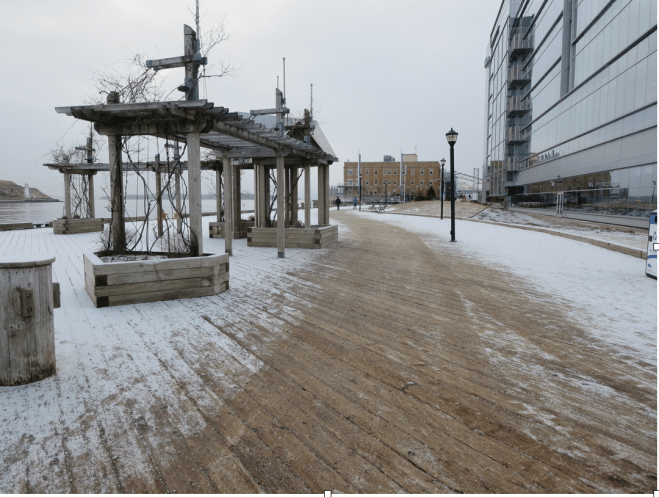
screen shot 2019-01-21 at 18.02.01Halifax HarbourWalk at 9 am. Just a hint of snow overnight and they’d already salted the whole boardwalk. There were joggers out. And people walking dogs. And others, like me, just feeling the air.

And so I walked. And I walked. And then I walked some more. On the first day, I walked for over two hours straight. Just because I could. It was gorgeous weather: sunny and just below zero.

It was -8 the second day, close to -20 with the wind chill. But still I walked. And I walked. And I walked some more. Another two hours. Just because I could.
screen shot 2019-01-21 at 18.04.23
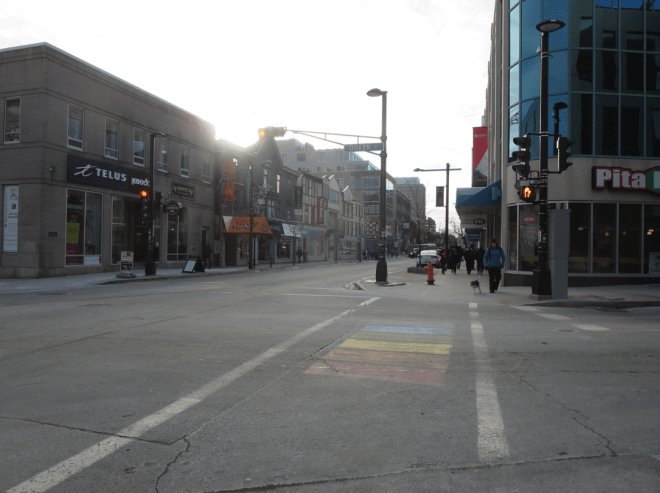
Look at the lovely sidewalks on Spring Garden Road! Loads of pedestrians, too, although I tried not to take photos of them.

I walked to feel the air. I walked to breathe. I walked to feel my body moving. I walked for the sheer pleasure of moving my body freely in the winter. I walked because I didn’t have to hunch myself over, picking through the ice and snow. I walked because I could hold my head high, because I could turn my attention away from fear and toward feeling the air against my skin, my feet moving confidently, one in front of the other. I walked because I could. Because I didn’t have to worry that I would end up upside down somewhere.
screen shot 2019-01-21 at 18.06.38
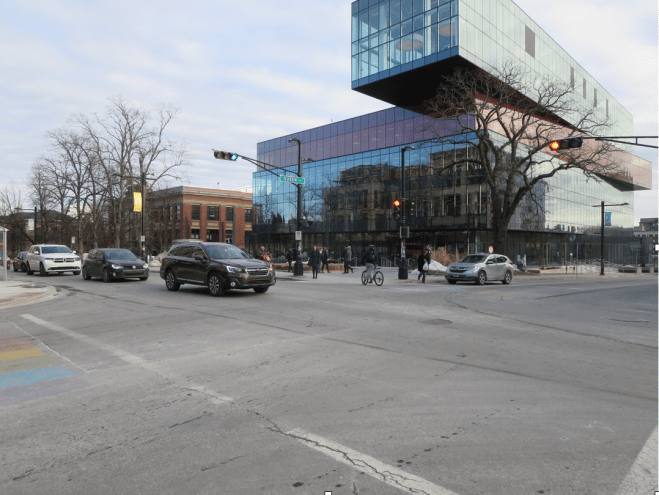
Look at the beautifully cleared and ice-free open space in front of the library – safe for wheelchairs and strollers and anyone who wants to go the library.

I realized, sometime during that second day, that I hadn’t felt this free in winter in years. Eleven years, to be exact, since our first winter in St. John’s.

It was ….
Wonderful. Exhilarating. Liberating.
It was incredible.

But it couldn’t be normal, right?

It must have been an easy winter.
It must be better weather in Halifax.
screen shot 2019-01-21 at 18.07.54
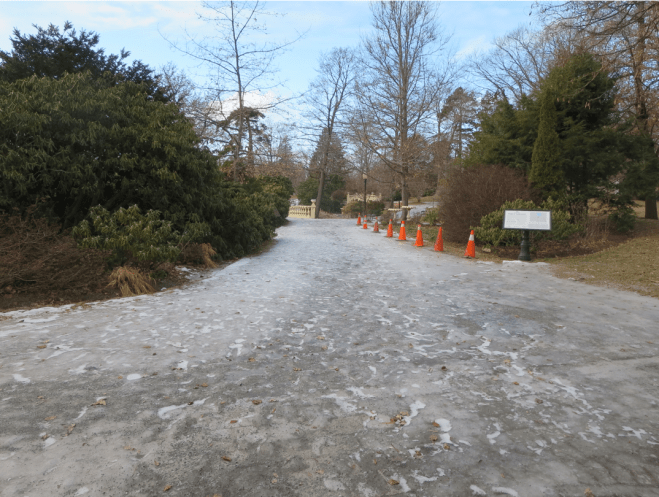
Where you can’t walk in Halifax: The Public Gardens are a skating rink right now, and their existence shows what happens when a city doesn’t keep up with the regular salting and clearing. They’re also closed to the public right now, which is probably wise.

What was Halifax’s secret?

I asked a friend, a Haligonian from birth who has spent the last four years living in St. John’s. Two weeks ago, she returned to Halifax to work on her thesis proposal over the winter term. I figured that if anyone would know the scoop, she would.

“So, what’s the deal? Is it always like this, every winter? Or is this just a weird winter?”

“It’s always like this,” she said. “And after four years in St. John’s, I’d totally forgotten. It’s amazing.”

She told me that she’d been raving about it to friends, other Haligonians she’s known for decades.

“I keep commenting on it and they just don’t get it, because it’s normal….”

Let’s just pause right there.

Because. It’s. Normal.

Nothing else. There is no magic.

Just…because it’s normal.

And so it should be in St. John’s.