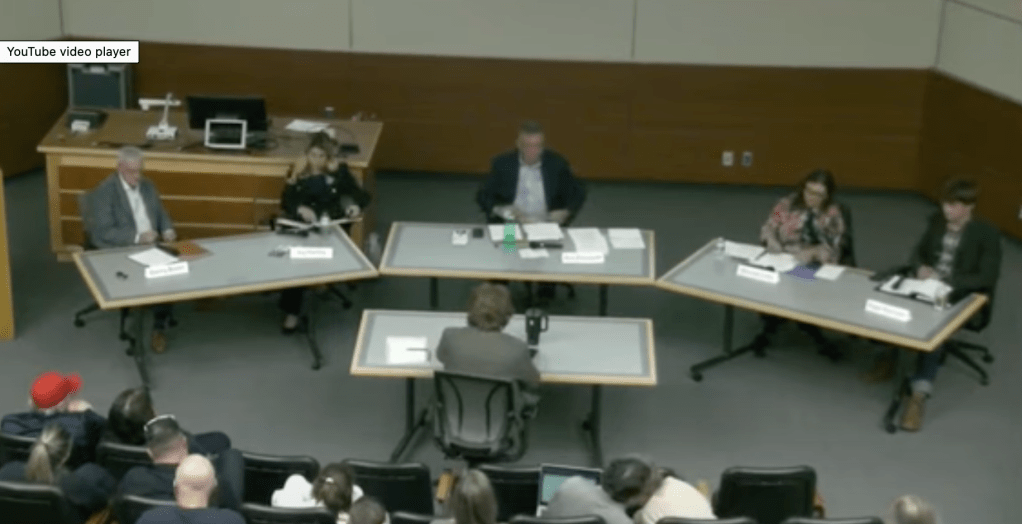
Mayor and Deputy Mayor Candidates, St. John’s Election

The question for these candidates focussed solely on Metrobus but I think their answers are still telling in terms of their broader views on how people get around the city. The mayor used most of his time to argue that the City isn’t responsible for Metrobus and Ivy Hanley used hers to talk about what the city is doing wrong so it was hard to get a sense of their views on transportation and accessibility more generally. In the deputy mayor category, however, there were major differences in the candidates: After contradicting Ivy in his opening statement, Ron Ellsworth simply listed the new routes the city has added, but without any context or any evidence that he really understands or cares about actual riders’ needs and experiences. Bianca Lono was a striking contrast since she focussed on public engagement findings and her own discussions with people who take the bus. (Note, she also came to a Jane’s Walk on Sunday about active transportation and seemed very willing to learn.) Rigel Penman has a very low key campaign but I was impressed by how articulate and thoughtful he was in general. His answer to this question was heartfelt and based mostly on his own experiences as a regular user of Metrobus, but he also showed that he understands the key connection between a good transportation system and other aspects of daily life.

The question: The number of people using Metrobus has nearly doubled since 2021. The service has seen some improvements in that time and over the next term the bus network will start to be electrified but the overall number of buses is not projected to grow significantly and the basic shape of the network has not changed. Surveys indicate it is among the services voters are least satisfied with. Do you see a need for a major overhaul and, if so, where would you start?

Candidates For Mayor:

Danny Breen: First of all, Metrobus is managed by the Metrobus Commission which has two councillors who are representatives on that commission. So as a Council, we oversee the operation but we don’t get involved in these daily decisions but we do approve the strategic plans and the other information that comes forward. We have had a tremendous increase in ridership. We’ve also been able to add the low income bus passes through the provincial government, which was a big bonus to us as well in terms of extra ridership but also in revenue that we needed to be able to expand the bus service. I think the next thing we need to look at with Metrobus is how we’re going to be able to handle the regional aspects of it. We’re going to have to work with Paradise and Mount Pearl in particular to see how the bus system can service their communities and how that takes place and what it looks like. To do that we will probably have to look at some additional capital requirements for busses into the future and that would also be part of the electrification of the fleet, and that is something that will happen at some point here. But I think right now we’re having some growing pains with Metrobus, we have under serviced areas, we’re going to need some capital investments.

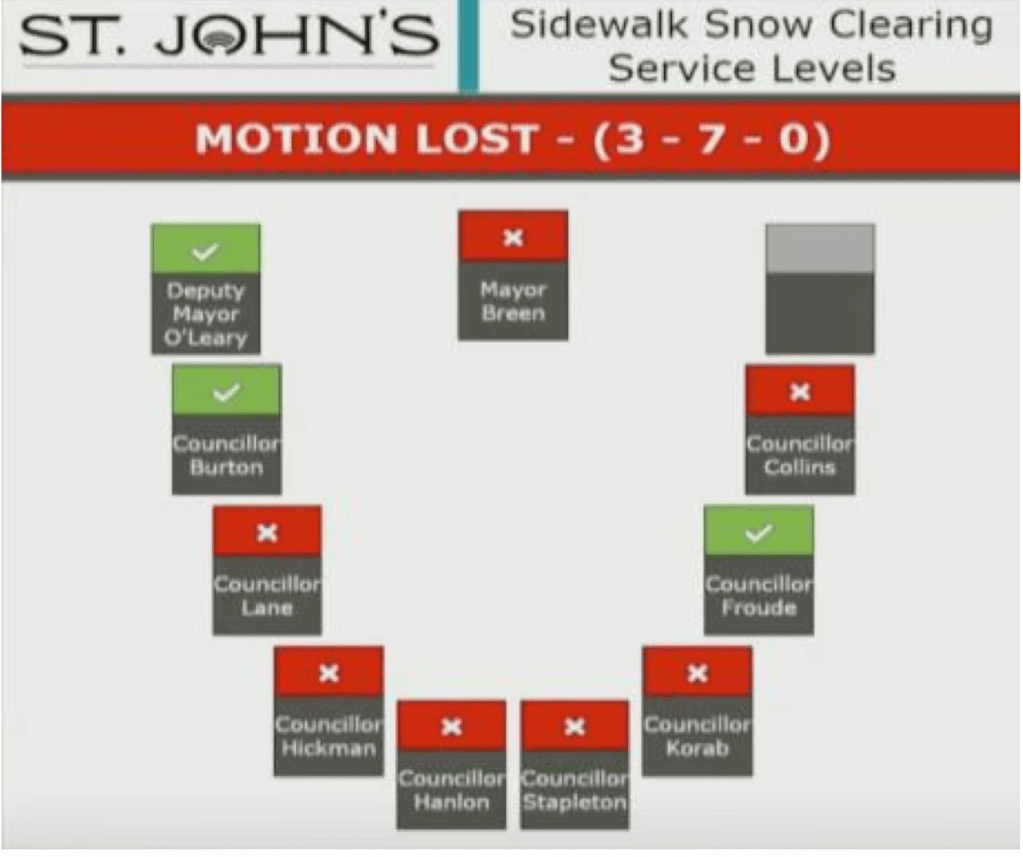
Note that in 2020 Danny Breen voted against a motion to make significant improvements to sidewalk snowclearing:
Ivy Hanley: Ridership does continue to grow and so does the revenue. It’s been great that they had almost $700 thousand surplus. That went on debt and that is a good thing but it can also be looked at as sometimes it’s good to reinvest. If we’re having a surplus and we need more busses, sometimes servicing the debt fully with any surplus, it should considered maybe putting it back in the system so we can look at getting more busses. Right now, there is no plan to grow it. We did just get $53 million between the province, feds, and municipally, to upgrade to new hybrid and diesel busses that are on the way, but it’s just to replace the fleet. It’s not to add busses. We need to focus on adding busses. We need to have a plan and we also need to start talking about a public bus depot. Where is the plan for that? If we’re going to expand more into Paradise and Mount Pearl, we need a public bus depot to speed up the service.

For Deputy Mayor:

Ron Ellsworth: So we don’t see the numbers continuing to increase. They were 5.2 million, now they’ve dropped down to 4.8 million so we’re actually seeing ridership drop, not increase. The number of routes that are out there: the zip routes have increased, the timing has increased and there is a plan. The plan gets us into 2026 with all routes being down to a half hour. Mount Pearl and Paradise have their own challenges. This is a municipal service. Those municipalities have to come to the table and pay for their own service and programs. That needs to happen. It can’t be done on the backs of the taxpayers of St. John’s. Very quickly, I only gave you the addition for the summer of 2025. Additional bus on route 10 Saturdays. Additional bus on route 10 Sundays. Additional bus on route 12 on Saturdays. For fall 2025 we see an additional bus on route 10 weekdays, additional bus on route 10 for Saturdays, additional bus on route 1 for weekdays, 7:45-12:00 AM. Additional bus on route 1 Saturdays 6:00 PM-12:30 AM, additional bus on route 1 on Sundays from 9:00 AM to 9:00 PM. Two additional busses on Route 2 Saturdays 9:00 PM-12:00 AM, two additional busses on route 2 on Sundays 6-8:00 PM. To say there’s no plan is incorrect. There is a plan and it’s being implemented by the city.

Bianca Lono: Knowing that we need more bussing, but what can we do to mitigate that in the meantime? Maybe looking at some of the routes and how they are designed, so longer service hours I know is one thing that came up with city engagement, being able to have it on holidays and weekends, requesting for shorter travel times and fewer transfers between busses, because sometimes the illusion of having the busses on the road vs the efficiency of the busses can make a big difference. The other thing I wanted to mention as well is where some of those bus stops are. That is something I’ve been hearing a lot from people as well is that they have access to a bus stop but it’s far away and then we won’t talk about snowclearing in the wintertime yet in terms of being able to access some of those bus stops. So while we’re waiting for that funding to have more busses introduced into the system maybe it’s just, I would like to see community engagement, having actual bus riders collaborate with the Metrobus Commission to be a part of those decisions because sometimes we think we know the answers but if we don’t ride the bus then we don’t necessarily have all the answers.

Rigel Penman: I absolutely agree that we need very significant expansion in public transit, starting with the bus services and, while I recognize that is a big cost issue—busses are expensive to acquire and to maintain and to staff—it is the type of thing that is so important both for accessibility and livability of the city. I mean it’s really hard to get to work on time when you have to jog for forty minutes. I have to do it fairly regularly and it creates a problem after a while when you show up to a job interview pouring sweat because you just ran 10 km. I’ve heard many people say that oftentimes if you miss your bus it’s faster to jog than to wait for the next one to show up. This is the type of thing that helps so many aspects of the city that I think it is worth finding the room in the budget. I believe there’s a lot of efficiencies to be found in the budget without going through any type of chainsaw bureaucracy type measures. We can find the money to actually increase the bus service and it is very worth doing so, so I would want to prioritize that as a big goal, both in terms of rerouting busses, and acquiring more busses, hiring more drivers and increasing our cooperation with CBS and Mount Pearl to allow our communities to be more connected. Thank you.

You can watch the full debates here.
And see their platforms and contact information here.
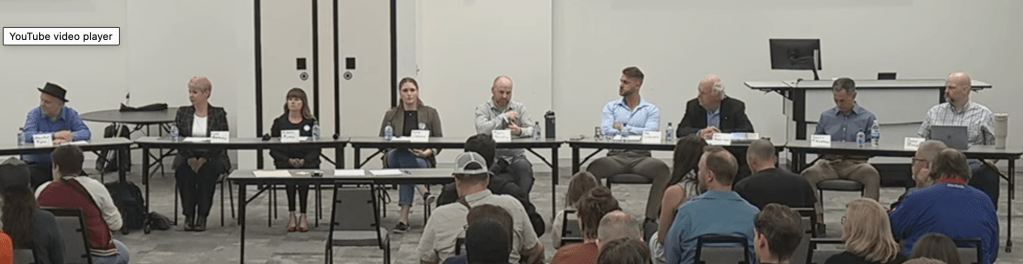
At Large Candidate Debate, St. John’s Elections

At Large Transportation Notes:
It was really wonderful that so many candidates were well informed on this issue. Since that was the case, I won’t try to tell you who to vote for but I will make a few comments: Myles Russell has enormous professional knowledge of these issues along with housing and is deeply committed to using his knowledge to build better communities. (He is the only candidate I know personally.) Kate Cadigan and John Barbour seemed to me to be particularly well informed as well, and Nikita Ryall and Wallace Ryan clearly spoke from many years of personal experience getting around without a car, Nikita also from professional experience working with people whose lives are affected. I added links below Art Puddister and Sandy Hickman’s comments to articles about their past performance on these issues. They are the only at large candidates who have been on Council before so it’s helpful to remember what they did and said. Sandy Hickman voted against an important motion to make significant improvements in sidewalk snow clearing in 2020. Puddister’s comments speak for themselves in the article.

The question they were asked: “Transportation and mobility, including infrastructure, public transit and active transportation: Between the controversy surrounding the City’s Bike Plan, frustration with Metrobus service and longstanding concerns about snow removal and walkability, residents are concerned about how people get around in St. John’s. What do you think should be done to improve transportation and mobility in the city?”

John Barbour: We need people taking more public transit. We reduce the rate—reduce it to zero. If you’re on a Metrobus, you’re not driving a car. If you’re not driving a car, you’re not tearing up our roads. More people on the bus, fewer cars on the road, better roads. Bike lanes? Again, less cars, more people moving around quicker and easier—it’s a lovely time. In lots of other wintery countries they manage to keep bike lanes paved year round, accessible and easy to use, so let’s get some more of them. I also think we’re not doing much with sidewalk clearing. It is getting much better than it used to be. Some streets in the winter, I can walk 200 meters without having to dive through a snowbank or walk into dangerous traffic or live in fear. But our city has a walkability score of, like, 37. It’s terrible. We need more grocery stores, more smart urban planning—we need to be more walkable to be more sustainable and we need to be more sustainable to be a more livable city. That’s where we need to go.

Kate Cadigan: [Note, when Myles reached his time limit without a chance to speak directly to sidewalks—he has been clear in the past about the crucial importance of sidewalk snow removal and year round accessible sidewalks—an audience member spoke out to make that point. Myles applauded her and Kate picks up here to reinforce it.] Exactly, that’s just what I was going to say. It’s not only about how we move but why we move and mobility, transportation and active infrastructure impact why we move. So we go to school, we go to grocery stores, medical appointments, different opportunities and people around our city are limited in opportunity because we are not providing adequate public transportation and active infrastructure. This means expanding our shared use paths, our bike lanes but also seeing this kind of transportation and active infrastructure as an investment in our people. When people move around our city, we see so many different kinds of benefits. I would take up more than 90 seconds if I tried to list them all off. So it’s not good enough. The sidewalks is another one. It’s not safe and to me safety is always a priority for anybody walking in the winter or anytime. There’s a sidewalk that’s not up to regulation I can barely walk on it with my lab, we’re falling into traffic. How is that good enough? How can we keep people safe because clearly we’re not doing enough.

Paul Combden: Certainly we should increase funding for metrobus. The ridership is growing and it seems like the funding was cut recently. And we should propose express routes between high traffic areas like Avalon Mall, the Village Mall and MUN. Reduce travel times and increase the numbers of people using Metrobus. In terms of the sidewalk snow clearing, I think it should be more focussed on the clearing post storms, to keep the paths safe and usable. For bike lanes, I think we could have the separate bike lanes that are protected and the multi use trails that are safe for all users—walkers, wheelchairs and e-scooters and then promote universal design to ensure sidewalks, infrastructure and paths serve all abilities

Scott FitzGerald: Metrobus obviously needs to be redesigned and improved in ride frequency and speed. Get the kids hooked when they’re young, let them ride for free to get their loyalty long term. We’re a winter city. Continue to improve sidewalk snowclearing. Fifteen years ago it was a pipe dream but now we how important it is and we realize we can’t do without it so we should continue to build on that. Shared use paths, fantastic, love Kelly’s Brook, we need more of that, more bike paths throughout the city. I would like to keep Rennie’s and Virginia River trails however pedestrian only.

Lynn Hammond: I’m a driver. I don’t use public transportation in this city and, for some reason, when I go to other cities, I do. It’s what I do. But, as a driver, like many of us, I complain about the potholes and the scratch and patch that they do in the summer. We all recognize that there has to be a better way to manage our aging infrastructure. With regards to public transportation, I think that we have an issue with perception as one of the challenges to Metrobus. Ultimately, it goes to our core services. The reality is that there’s a set amount of money that’s available so I would really like to see a core services review, very common with the provincial government and I’d like to see it at the city level to have real measurement of when projects will be done and in what timeframe. “Without that kind of accountability, it’s hard to see what’s aging and what’s not, and what the changes need to be.”

Walter Harding: Absent

Sandy Hickman: Absent:

https://www.cbc.ca/news/canada/newfoundland-labrador/sidewalk-snow-clearing-budget-increase-st-johns-1.5726065

Art Puddister: The city received $30 million a number of years ago. It was all spent on the new depot off of Kelsey Drive. There was a push at that time to put more buses on the street but the decision was made for a new depot. I don’t ride Metrobus but I reide it every now and then. I think the last time I did was a few years ago. It’s a lot more convenient than people think. I think we need to put more money into Metrobus, I think the service should be free for seniors, for students, for young people. I think we should probably introduce a pilot project for people riding free. As someone said, let people get used to riding Metrobus, and if you look at where they go—where do they go? They go to the Avalon Mall, the Village Mall or some central point, right? The next thing is the clearing of sidewalks. I mean, the city needs to spend more money clearing sidewalks. That means the snow has to be removed. When the plow comes by it just plows it onto the sidewalk. Years ago, they would use sidewalks for snow storage, no attempt whatever to remove the snow. That was wrong and I spoke against that. So, once the plows fill the sidewalks the snow has to be removed. So what we need to do is to put more money on Metrobus and put more money on sidewalk clearing.

Myles Russell: In 1966 Metrobus had 54 buses. It’s 2025– they have 54 buses, the population is over double and the city is six times as big! Transit ridership has almost doubled in the past five years and we’ve bought zero additional buses to expand the system. In fact, they’ve cut route six in half to make room for Galway that has four stops. We can’t talk about any of this without talking about accessibility. We work with Happy City—full disclosure—with my non-profit, we looked at the number of routes that are accessible all winter, that is: has a covered shelter, is lit and has cleared sidewalks—from 920 stops to 22! 22 stops! There are 600,000 car parking spaces in St. John’s. There’s 120,000 people. We’ve got space to put in bus only lanes, bike lanes on the street. Kelly’s Brook path—amazing trail—there’s no traction plate for people who are blind. Rennie’s River trail is more expensive to build than a suburban road. This city has an addiction to love of cars. I drive a car but my Metrobus pass is in my pocket. I was hit three times on my e-bike riding up Major’s Path—Major’s Path, a path that dips into a hole of gravel because the city doesn’t care about connecting things, so I want to be clear: transit sucks here and that’s because the city doesn’t have a plan to fund it. I want to build transit friendly development in low value commercial spaces so we can address housing, accessibility and all these good things!

Nikita Ryall: As a person who works in community, this is an issue that comes up almost daily in my work. As a person who used to ride the bus and was unable to work on a Sunday because the bus didn’t go where I lived on that day, and then we talk about poverty. Well, if people can’t get to work, they’re going to live in poverty. I believe we need to have more reliable, affordable and accessible buses, but also make it easier and safer for people to have the option to ride a bike. Sidewalks need to be cleared so not just people who are trying to get to the Metrobus but also the people who are choosing to walk or wheel to their daily duties [can do so] and I do think there needs to be an overview and a revamp of Metrobus and how people move through the city. And we need to make sure that the sewage and roads are up to date to handle the growth and the density in the city.

Wallace Ryan: I think about the way I transit the city myself. I’m over the age of sixty and my knees aren’t quite what they were in the old days, so I have recently taken to the e-bicycle and I find it great for getting around. But, of course, the roads are terrible, except for that path right in front of MUN here. That was wonderful! I came right up Newtown Rd. and I came down it and it was gorgeous! I think actually we do need more bike lanes because the more bike lanes, the more people like me will get out there and bike. During the wintertime of course I ride the bus. I’m a big supporter of Metrobus. Sometimes it’s not the most pleasant experience to be sure but it gets me around and I think we should put a bit more money into Metrobus. Buses are nice, they could be a bit nicer. As for snowclearing, I live in the downtown, I’m woken at night by the snowclearing and all that. For the most parts it’s fairly well organized but there are parts that could be done faster, especially the sidewalks more than anything else, and especially downtown. Uptown you’ve got big wide roads, we’ve only got tiny little roads downtown.

You can watch the full debates here.
And see their platforms and contact information here.
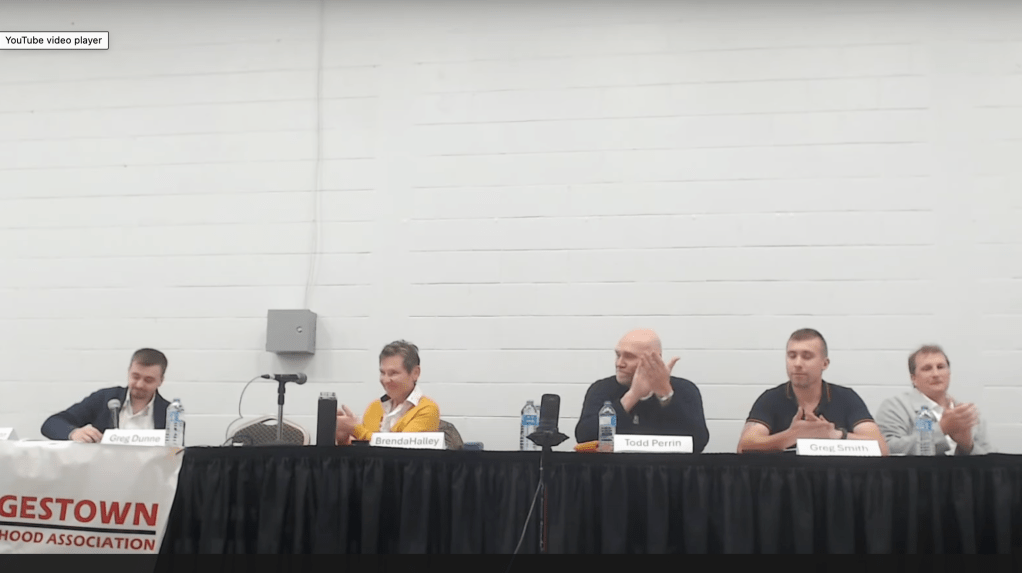
Ward 2 Candidate Debate, St. John’s Elections

The St. John’s candidate debates this year were wonderfully refreshing in that almost all the candidates emphasized accessibility, better public transit and clear sidewalks year round. Most also talked about cycling infrastructure. What they will actually do if elected is a different question but the way they spoke suggests a real cultural change in attitudes on transportation and a move away from car culture.

Ward 2 was the only ward to have its own debate, probably because it’s the only one with more than two candidates. All of the Ward 2 candidates seem to be knowledgeable and committed on these issues. Here’s what they said about getting around the city:

The question: A modern inclusive city must ensure safe and accessible transportation for all, whether on foot, bike, bus or car. What are your top priorities for improving mobility in Ward 2 and how would you invest in infrastructure and policy to support active transportation, public transportation and accessibility for people of all abilities?

Philip Barton: The biggest problem with public transportation is that you cannot plan ahead. When you’re taking the bus, we need screens that are going to tell us when you’re going to arrive, when there’s a delay, so people don’t have to call or look something up, they can just look and see it, like they do in subways, like New York City, so you can know you’re not going to get to work on time, plan ahead, get a taxi. Another thing about transportation in this city: we have an Uber problem. Let’s be honest. It pays a slave wage, it’s driving our taxi companies out of business. Big tech companies, they go bankrupt all the time. Uber goes bankrupt, all the cab companies are gone, and we’ve got no cab system in our city. So we need to protect these cab companies that have been around for a while, to make sure they’ll be around. If we’re going to be elbows up, yay Canada, we can’t be supporting an American company that’s basically forcing people to work for pennies. I also think that we need to have separate bus lanes so we can get places faster, more bus stops so people won’t have to walk thousands of kilometres to get to a stop, and the biggest thing is we do need more buses, more people are using it, and of course, going back to the thing about businesses, people are having to go a thousand miles, they have to go to Mount Pearl to find stuff, to get a mortgage, if we could create more jobs in the city, people would have to use the transportation less. The solution shouldn’t be to have people in gas guzzling [vehicles] creating greenhouse emissions.

Greg Dunne: Absent

Brenda Halley: Our transportation system as we know it is not accessible, it doesn’t work, it’s very old and it needs to be revamped. I was just shopping at Dominion the other day and a young cashier asked me if I could help her. I asked why and she said that she lived in Shea Heights, the bus system doesn’t go to Shea Heights on Sundays at all, and doesn’t go past six o’clock in Shea Heights. The busses are not accessible. A friend and I were discussing that there was a mother with a child in a wheelchair and the bus driver had to turn them away, they couldn’t get the child onto the bus with a wheel chair. We’ve lost our bus shelters. Many of them are gone. One of the reasons we were told that they were taken down by City Hall was that there was excessive drug use and people were being sexually assaulted in them. So there we go with the police control, and the horses again [in an earlier question she had talked about the value of police on horseback]. I think that we can do better. We have bike lanes. The city are doing well with bike lanes, but I think we can do better. We need more. Every time my partner goes… you can see my biking short here. We’re a family of five and we bike. If one of us drive, one of us bikes. My kids use the bus all the time. They love it. It gets them all around the city because I can’t take them all around the city. The bike lanes are great but they’re not everywhere and in this city the drivers go really go fast. You’re taking your life in your hands. So when my partner bikes to work every morning for the last eighteen years, I always say, can you call when you get there? Because I always wonder if she’ll arrive alive.

Todd Perrin: Clearly, accessibility and ease of getting around the city is of the highest importance. The Metrobus has come a ways in the last few years: they went from no one on the buses to too many people on them at times. We need to invest in their infrastructure, to Brenda’s point, which is a good one and I’ve heard a lot of the same things from folks who work with us. The buses run on a schedule that’s convenient for them, and not for when people need to be on a bus, so I think they need to take the customer into consideration in terms of who’s riding and where they’re going, when they need to be there. It is, after all, a service for the people of the city, not something the city should run the way they want to run it. It is something that needs to be considered. Also, on the whole transportation issue, the city has become way too focussed on cars. We talk about cars and parking, we talk about housing and development and all that kind of stuff but how many developments have been turned down in the city because they’ve got three parking spots too few. We’re so focussed on the number of cars that can be piled up in front of a building to the detriment of growth and better accessibility and places for people to live. So that whole piece of it is something that needs to be considered. But obviously you can’t start restricting cars and having development without parking or less parking if we don’t have alternatives and other ways for people to travel. We need more bike lanes and accessibility for bikes around the city. It’s not a great city for biking obviously. Its narrow road system is not built for that, there’s a lot of infrastructure changes that would have to be made. A big part of it too is a public campaign, let people be aware there’s bikes on the road. People drive around town and they’re very oblivious to bikers and walkers and everything else: too many cars on too small roads, too poor infrastructure, we need to rethink the whole way we do things about that.

Greg Smith: This issue hits home for me. I’m 29, 20 years of my life I’ve spent solely as a pedestrian and a user of public transit in the city, going to and from work and services and everything. To echo what Philip said, we need audio and visual announcements on the bus. It needs to happen. We need to make sure that we have accessible stops year round for people, how many times are you walking through snowbanks, just to get to a bus stop? That’s not good enough. We need to have more bus shelters in this city. Taking them away doesn’t address the issue of why they were taken away—they need to exist across the city. I work at the airport. I bartend and I serve. I use Route 14—very dumb route. It tries to encompass the airport route and it also tries to encompass residential. I’ve been late for work many many times. We need to have a route to the airport that is express, that goes from the downtown core to the Avalon Mall, to MUN Centre and straight on to the airport. We also need to have more routes in this city. We need more buses. We need some routes that address not just the issue of frequency—that is an issue and a huge one— but capacity is an issue. Three times in the rain and the snow I was if you can fit in until the next stop, get on. If not, what was I supposed to do? Wait half an hour? No, we need some accordion buses like Halifax had thirty years ago on certain routes that make sense geographically so we can address the issue of capacity. When it comes to transit on a greater scheme, outside of Ward 2, we need to work better with other members of the metropolitan area so we can invest more. We need better snow clearing for sidewalks and we need to invest more to make sure we have bike lanes so that you can wheel and walk safely year round because getting around your neighbourhood should be a human right.

Blair Trainor: You made some great points there, Greg. Raise your hands, how many people here ride the bus on a consistent basis? That’s good. [Lots of people raised hands.] I don’t know if I have anything to say to you. How many people know this song? “I got a limosine that’s fifty feet long, forty feet long… take the bus.” I think that we’re preserving the heritage of that song, and that needs to change. My wife takes the bus. We have one car. We’re modest living but two cars and two car payments you’re looking at 6-10 thousand dollars extra per year or $22.50 a month [for the bus] so she walks about fifteen minutes to get to her bus stop, she works at MUN and rain, snow or shine, she walks there because I take the car. I work in Paradise. I’d love, love, love to be able to take public transportation to Paradise. However, we need municipal partnerships. We don’t have them. St. John’s recently went to CBS to help out with the infrastructure there and you know that highway that was built there by Mount Pearl Square. It was never developed, the city helped build it. Right now the city of St. John’s has 850 thousand dollars invested into development with other municipalities. When we talk about transportation, I would love to be able to ride the bus and in order to do that we need collaboration with all those other municipalities, and we need people to trust our public transportation, and we need to create a new slogan!

You can watch the full debates here.
And see their platforms and contact information here.
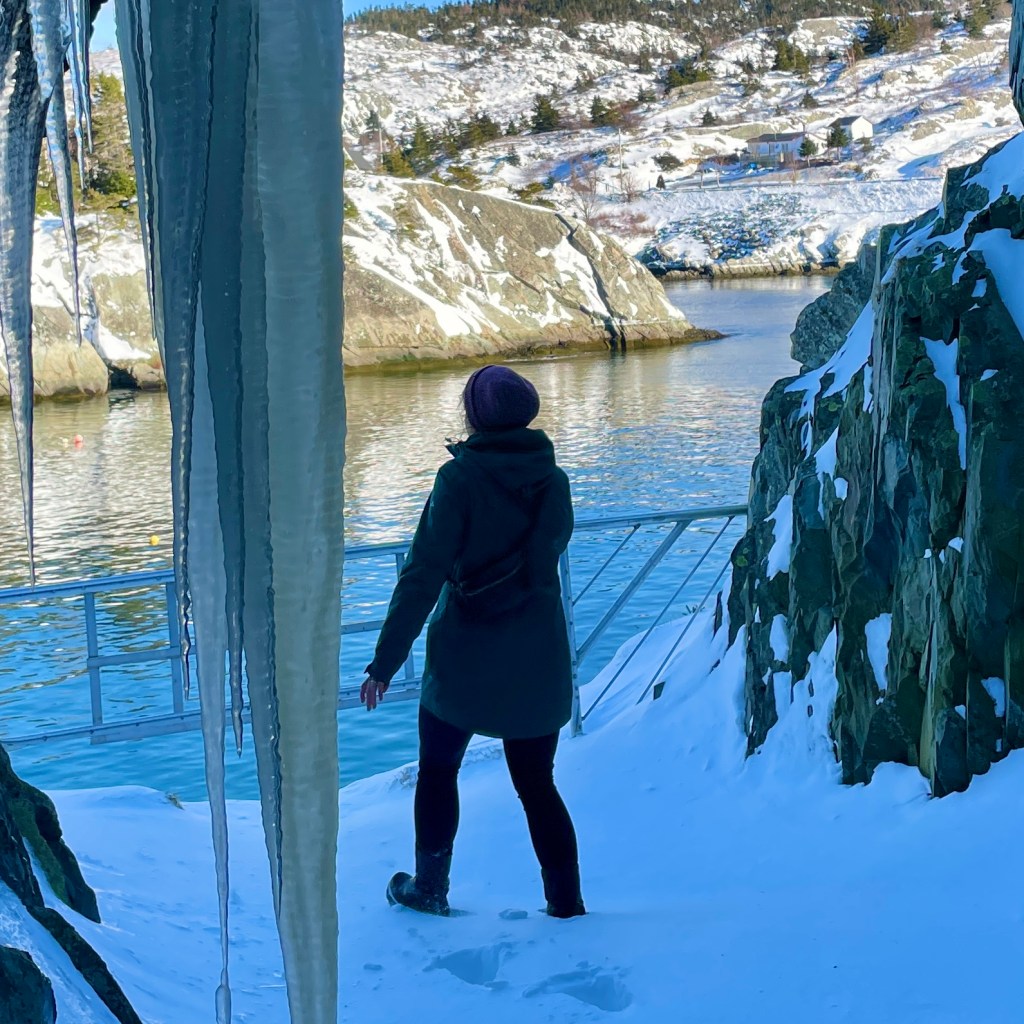
Freeze and thaw cycles

Woman standing in snow beside an enormous icicle

I took my little grandson to the library on Saturday to get his first library card. The librarian asked his ward number and showed me where I could look it up. “That’s okay. I know which ward he lives in,” I said. She was surprised–“Nobody knows which ward they live in! They always have to look it up!” “I’m obsessed with municipal politics,” I told her apologetically. I’m not sure why I feel the need to apologize but anyway. This particular post is probably even nerdier than most but I assume most people who read this blog share my obsession so here it is, freeze and thaw cycles!

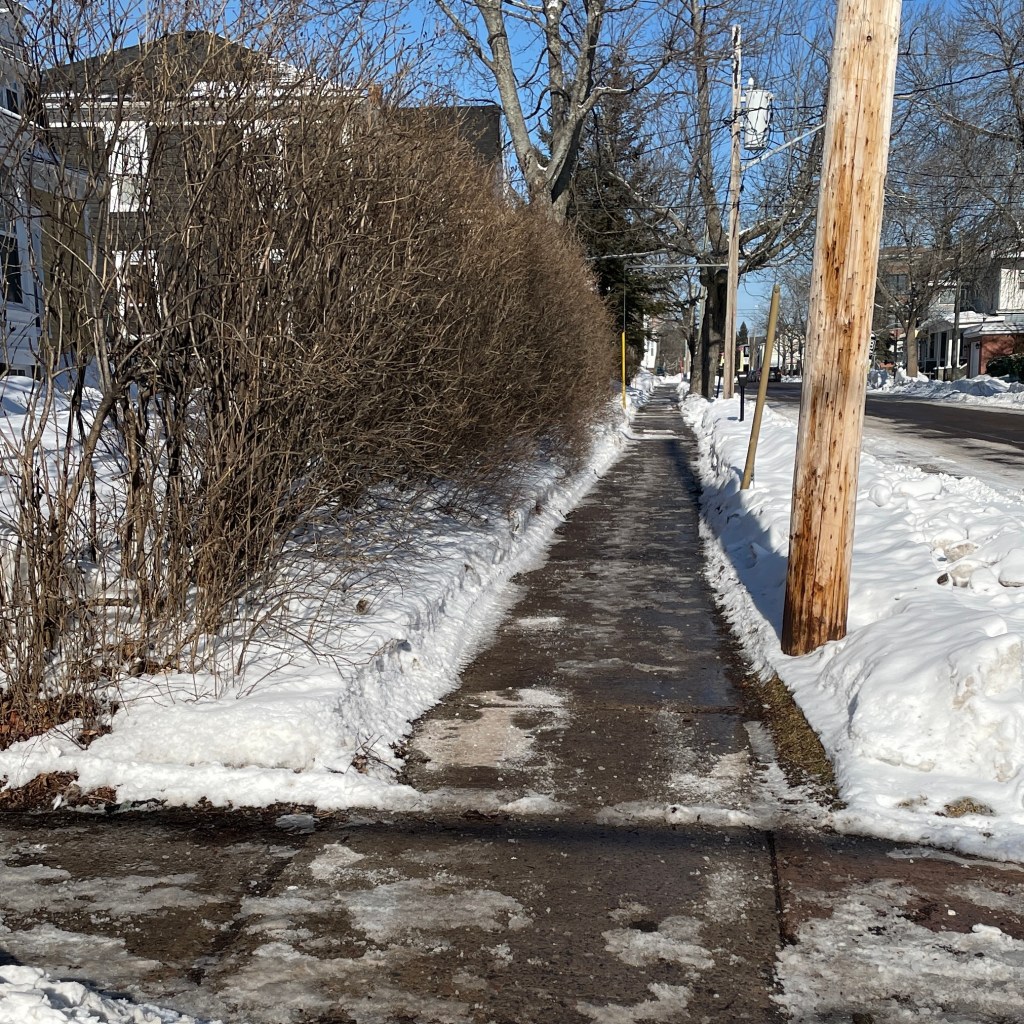
One of several excuses frequently given for why our sidewalks can’t be cleared properly is freeze and thaw cycles. We have a lot of them here in St. John’s. Anybody who walks around the city can tell you that. But are we an outlier? For some reason, in all the years I’ve been fighting for safe spaces for pedestrians, I’ve never looked that up. So I did. And, as with all the other excuses, yes, we do have challenging conditions but no, we are not an outlier. Saguenay QC gets almost as many freeze and thaw cycles as we do and almost as much snow and they clear the majority of their sidewalks. Both Halifax and Moncton actually get more cycles than we do–only marginally more but still, and they clear their sidewalks too. Halifax clears all of them (in fact one page of their website says they have 989 km of sidewalks and another page says they clear 1000!) I know, I know, Halifax gets a lot less snow than we do but we’re talking about freeze and thaw cycles. Moncton clears most of their sidewalks. I couldn’t find figures but if you look at their map you can see that the vast majority are cleared. Also, I’ve walked around Moncton in winter and they just do (see photo below). They get almost as much snow as we do and it’s a similar size city to St. John’s. Maybe we should ask them how they do it.

Sidewalk in a quiet residential neighbourhood in Moncton, cleared to bare pavement and salted.

I didn’t give the actual numbers for the freeze and thaw cycles because it’s complicated by rapid climate change but all the cities I mentioned are in the range of 65-75-ish per year and going down over time. Here’s the interactive map I used in case you’d like to have a closer look or check other cities.

Councillor Korab Responds

Here’s another update on my earlier post, Letter to City Hall. Last week Councillor Jamie Korab, Lead for Public Works, answered one of my questions on CBC Radio. I asked how much had been added to sidewalk snowclearing since 2021 and when timelines would be shortened? Councillor Korab said that timelines have been changed from 4-7 days to within 5 days and distance cleared has gone up from 161 km to 175 km. He also sort of answered another question about whether the City is enforcing the bylaw against dumping snow on sidewalks cleared by the City. He said “fines vary.” One more thing he mentioned that I found interesting is that the City decides which sidewalks to clear “based on vehicle and pedestrian traffic.” I’m not sure how they know this. They may have some way of tracking vehicles but I’ve never seen any pedestrian counters in St. John’s. So I’m left with new questions: in what sense do fines vary and how are these decisions made? And how is pedestrian traffic measured?

Hitting the streets for sidewalks

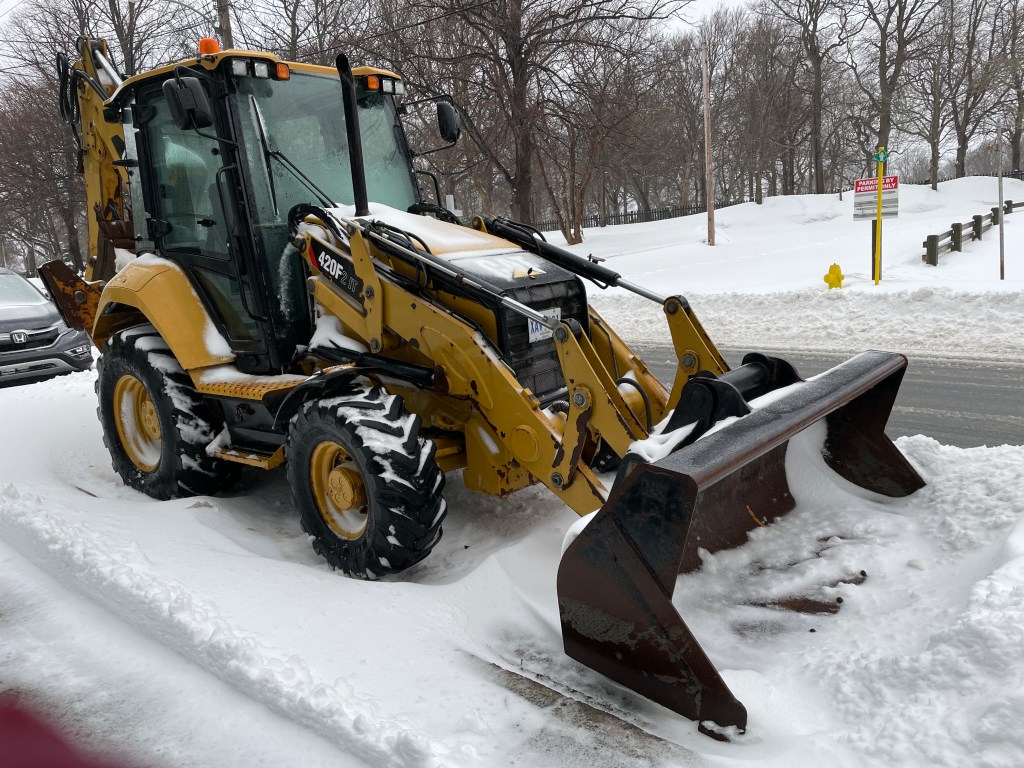
Too small to clear the sidewalk?

(Alt text: Photo of a parked sidewalk plow)

This morning I got up early to go for a cold but sunny walk with CBC reporter Darrell Roberts to check out walking conditions three days after the latest storm. You can hear about what we saw here.

Darrell also did an excellent multi-platform report last week on sidewalks and safe routes to school. Thank you so much, Darrell and CBC, for your unwavering support on this fundamental human rights issue!

Something I may not have said as clearly as I would have liked in these interviews is this: Why do spokespeople for the City of St. John’s say over and over that it’s too challenging to provide safe routes for pedestrians when they would never say that for drivers? On Monday, Lynnann Winsor, deputy manager of public works, said that all the streets had been plowed at least once but sidewalks would have to wait as “a lot of sidewalk snow-clearing equipment is too small for the current amount of snow.” Last week, Councillor Jamie Korab, Lead for Public Works, said “hopefully in future years more money will be invested” in sidewalks and then went on to talk in some detail about what they do “to make sure all roads are clear” even though he had been explicitly asked about sidewalks.

I understand that conditions are a factor but that excuse is not used for leaving streets uncleared. That just never happens. I guess my real question is why are pedestrians considered expendable when conditions get challenging?