I took my little grandson to the library on Saturday to get his first library card. The librarian asked his ward number and showed me where I could look it up. “That’s okay. I know which ward he lives in,” I said. She was surprised–“Nobody knows which ward they live in! They always have to look it up!” “I’m obsessed with municipal politics,” I told her apologetically. I’m not sure why I feel the need to apologize but anyway. This particular post is probably even nerdier than most but I assume most people who read this blog share my obsession so here it is, freeze and thaw cycles!
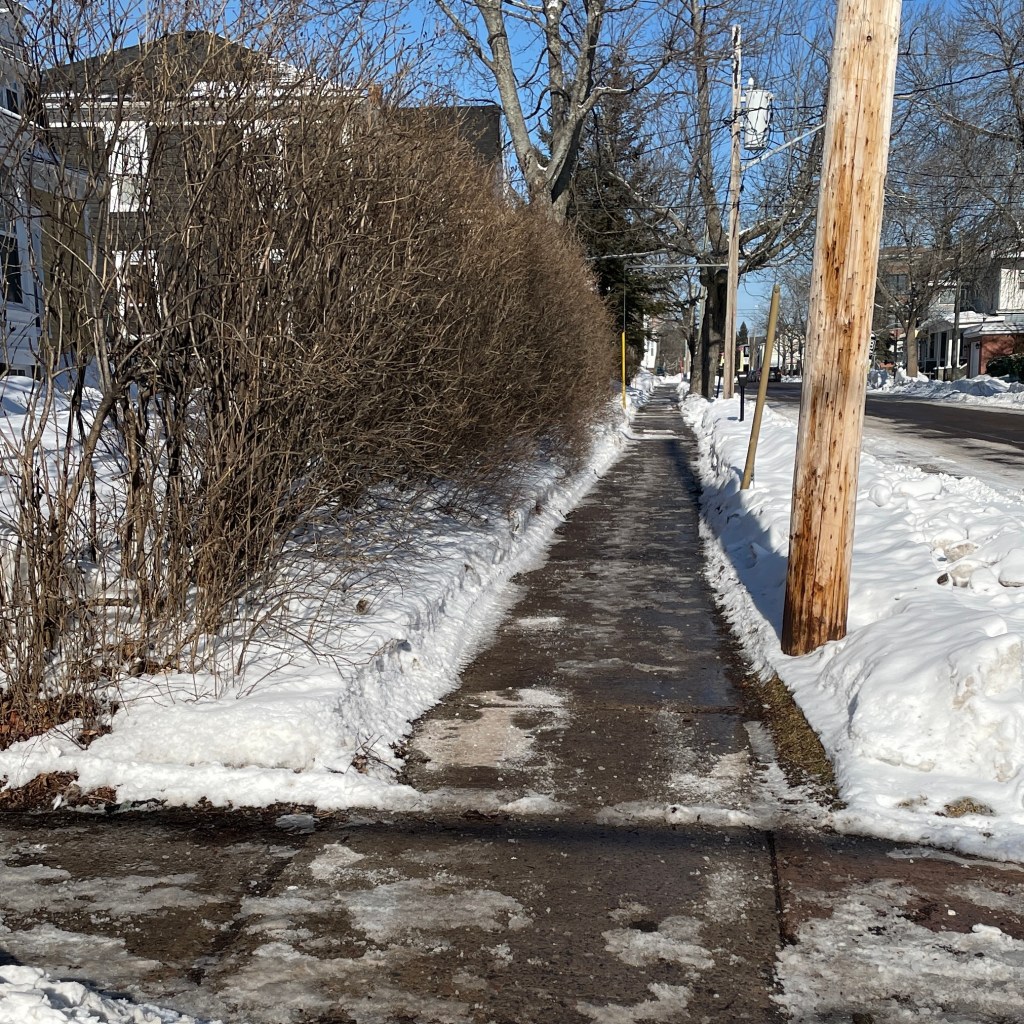
One of several excuses frequently given for why our sidewalks can’t be cleared properly is freeze and thaw cycles. We have a lot of them here in St. John’s. Anybody who walks around the city can tell you that. But are we an outlier? For some reason, in all the years I’ve been fighting for safe spaces for pedestrians, I’ve never looked that up. So I did. And, as with all the other excuses, yes, we do have challenging conditions but no, we are not an outlier. Saguenay QC gets almost as many freeze and thaw cycles as we do and almost as much snow and they clear the majority of their sidewalks. Both Halifax and Moncton actually get more cycles than we do–only marginally more but still, and they clear their sidewalks too. Halifax clears all of them (in fact one page of their website says they have 989 km of sidewalks and another page says they clear 1000!) I know, I know, Halifax gets a lot less snow than we do but we’re talking about freeze and thaw cycles. Moncton clears most of their sidewalks. I couldn’t find figures but if you look at their map you can see that the vast majority are cleared. Also, I’ve walked around Moncton in winter and they just do (see photo below). They get almost as much snow as we do and it’s a similar size city to St. John’s. Maybe we should ask them how they do it.
I didn’t give the actual numbers for the freeze and thaw cycles because it’s complicated by rapid climate change but all the cities I mentioned are in the range of 65-75-ish per year and going down over time. Here’s the interactive map I used in case you’d like to have a closer look or check other cities.
 Road Rage