At Large Transportation Notes:
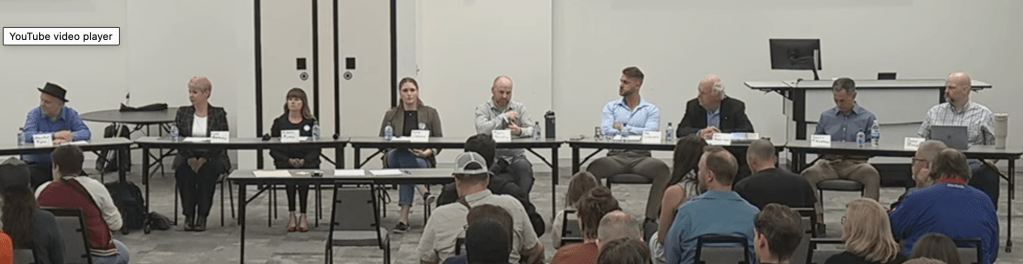
It was really wonderful that so many candidates were well informed on this issue. Since that was the case, I won’t try to tell you who to vote for but I will make a few comments: Myles Russell has enormous professional knowledge of these issues along with housing and is deeply committed to using his knowledge to build better communities. (He is the only candidate I know personally.) Kate Cadigan and John Barbour seemed to me to be particularly well informed as well, and Nikita Ryall and Wallace Ryan clearly spoke from many years of personal experience getting around without a car, Nikita also from professional experience working with people whose lives are affected. I added links below Art Puddister and Sandy Hickman’s comments to articles about their past performance on these issues. They are the only at large candidates who have been on Council before so it’s helpful to remember what they did and said. Sandy Hickman voted against an important motion to make significant improvements in sidewalk snow clearing in 2020. Puddister’s comments speak for themselves in the article.
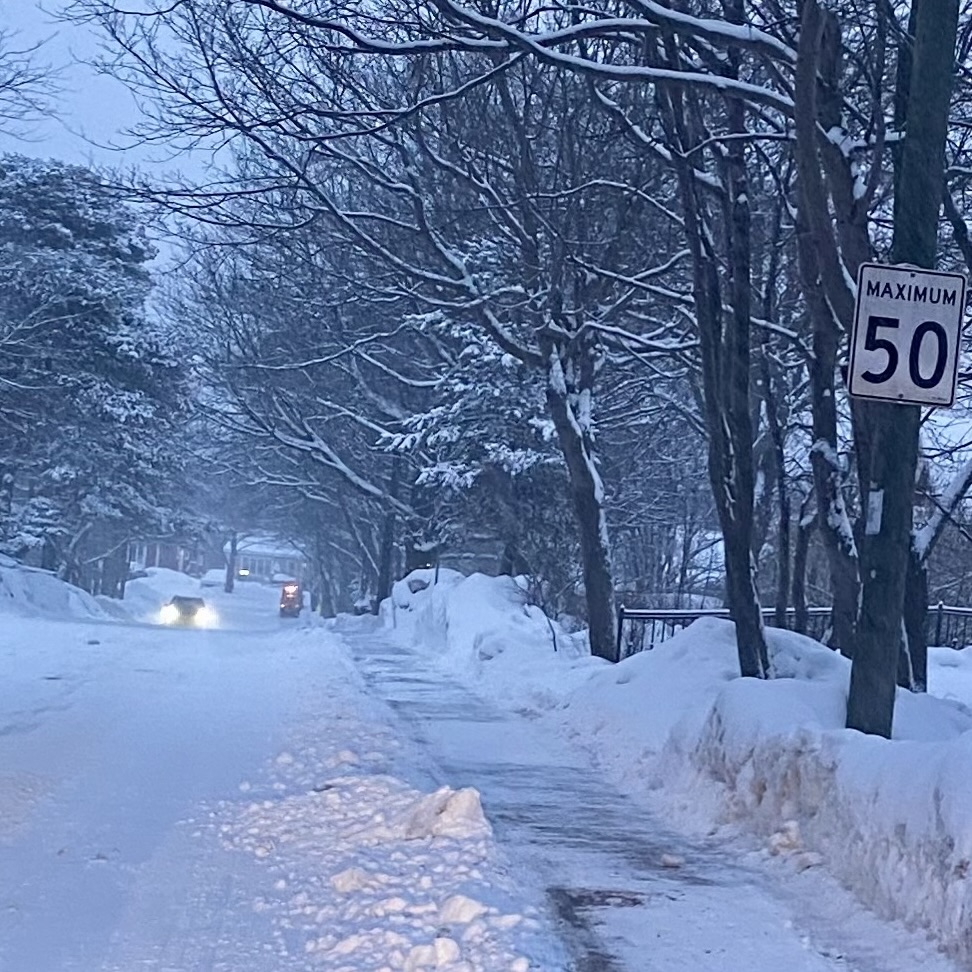
The question they were asked: “Transportation and mobility, including infrastructure, public transit and active transportation: Between the controversy surrounding the City’s Bike Plan, frustration with Metrobus service and longstanding concerns about snow removal and walkability, residents are concerned about how people get around in St. John’s. What do you think should be done to improve transportation and mobility in the city?”
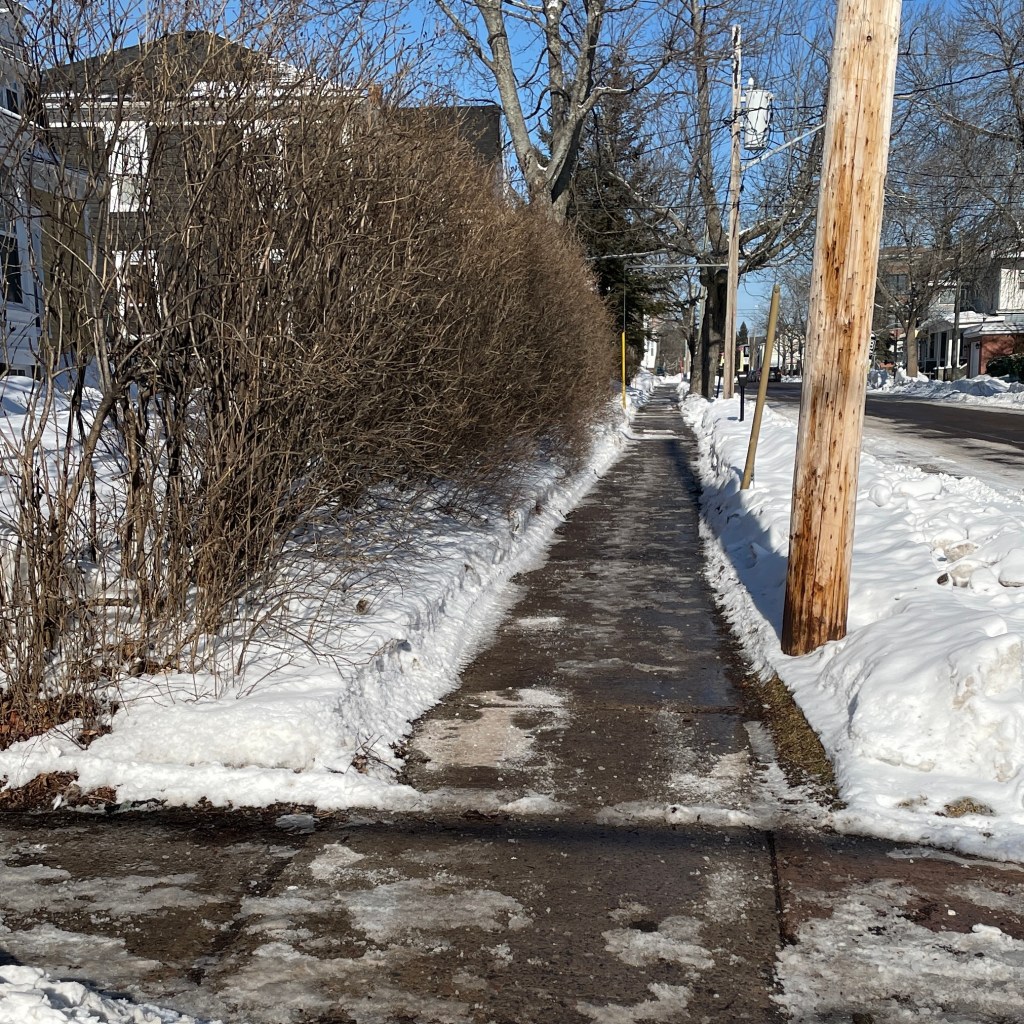
John Barbour: We need people taking more public transit. We reduce the rate—reduce it to zero. If you’re on a Metrobus, you’re not driving a car. If you’re not driving a car, you’re not tearing up our roads. More people on the bus, fewer cars on the road, better roads. Bike lanes? Again, less cars, more people moving around quicker and easier—it’s a lovely time. In lots of other wintery countries they manage to keep bike lanes paved year round, accessible and easy to use, so let’s get some more of them. I also think we’re not doing much with sidewalk clearing. It is getting much better than it used to be. Some streets in the winter, I can walk 200 meters without having to dive through a snowbank or walk into dangerous traffic or live in fear. But our city has a walkability score of, like, 37. It’s terrible. We need more grocery stores, more smart urban planning—we need to be more walkable to be more sustainable and we need to be more sustainable to be a more livable city. That’s where we need to go.
Kate Cadigan: [Note, when Myles reached his time limit without a chance to speak directly to sidewalks—he has been clear in the past about the crucial importance of sidewalk snow removal and year round accessible sidewalks—an audience member spoke out to make that point. Myles applauded her and Kate picks up here to reinforce it.] Exactly, that’s just what I was going to say. It’s not only about how we move but why we move and mobility, transportation and active infrastructure impact why we move. So we go to school, we go to grocery stores, medical appointments, different opportunities and people around our city are limited in opportunity because we are not providing adequate public transportation and active infrastructure. This means expanding our shared use paths, our bike lanes but also seeing this kind of transportation and active infrastructure as an investment in our people. When people move around our city, we see so many different kinds of benefits. I would take up more than 90 seconds if I tried to list them all off. So it’s not good enough. The sidewalks is another one. It’s not safe and to me safety is always a priority for anybody walking in the winter or anytime. There’s a sidewalk that’s not up to regulation I can barely walk on it with my lab, we’re falling into traffic. How is that good enough? How can we keep people safe because clearly we’re not doing enough.
Paul Combden: Certainly we should increase funding for metrobus. The ridership is growing and it seems like the funding was cut recently. And we should propose express routes between high traffic areas like Avalon Mall, the Village Mall and MUN. Reduce travel times and increase the numbers of people using Metrobus. In terms of the sidewalk snow clearing, I think it should be more focussed on the clearing post storms, to keep the paths safe and usable. For bike lanes, I think we could have the separate bike lanes that are protected and the multi use trails that are safe for all users—walkers, wheelchairs and e-scooters and then promote universal design to ensure sidewalks, infrastructure and paths serve all abilities
Scott FitzGerald: Metrobus obviously needs to be redesigned and improved in ride frequency and speed. Get the kids hooked when they’re young, let them ride for free to get their loyalty long term. We’re a winter city. Continue to improve sidewalk snowclearing. Fifteen years ago it was a pipe dream but now we how important it is and we realize we can’t do without it so we should continue to build on that. Shared use paths, fantastic, love Kelly’s Brook, we need more of that, more bike paths throughout the city. I would like to keep Rennie’s and Virginia River trails however pedestrian only.
Lynn Hammond: I’m a driver. I don’t use public transportation in this city and, for some reason, when I go to other cities, I do. It’s what I do. But, as a driver, like many of us, I complain about the potholes and the scratch and patch that they do in the summer. We all recognize that there has to be a better way to manage our aging infrastructure. With regards to public transportation, I think that we have an issue with perception as one of the challenges to Metrobus. Ultimately, it goes to our core services. The reality is that there’s a set amount of money that’s available so I would really like to see a core services review, very common with the provincial government and I’d like to see it at the city level to have real measurement of when projects will be done and in what timeframe. “Without that kind of accountability, it’s hard to see what’s aging and what’s not, and what the changes need to be.”
Walter Harding: Absent
Sandy Hickman: Absent:
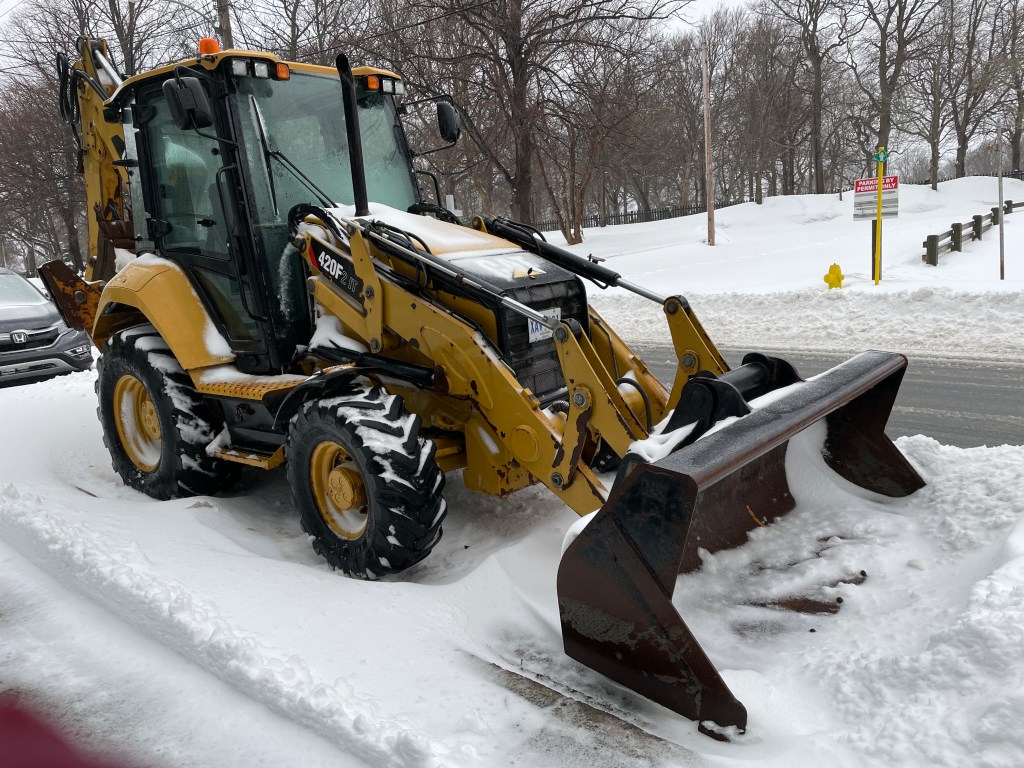
Art Puddister: The city received $30 million a number of years ago. It was all spent on the new depot off of Kelsey Drive. There was a push at that time to put more buses on the street but the decision was made for a new depot. I don’t ride Metrobus but I reide it every now and then. I think the last time I did was a few years ago. It’s a lot more convenient than people think. I think we need to put more money into Metrobus, I think the service should be free for seniors, for students, for young people. I think we should probably introduce a pilot project for people riding free. As someone said, let people get used to riding Metrobus, and if you look at where they go—where do they go? They go to the Avalon Mall, the Village Mall or some central point, right? The next thing is the clearing of sidewalks. I mean, the city needs to spend more money clearing sidewalks. That means the snow has to be removed. When the plow comes by it just plows it onto the sidewalk. Years ago, they would use sidewalks for snow storage, no attempt whatever to remove the snow. That was wrong and I spoke against that. So, once the plows fill the sidewalks the snow has to be removed. So what we need to do is to put more money on Metrobus and put more money on sidewalk clearing.
Myles Russell: In 1966 Metrobus had 54 buses. It’s 2025– they have 54 buses, the population is over double and the city is six times as big! Transit ridership has almost doubled in the past five years and we’ve bought zero additional buses to expand the system. In fact, they’ve cut route six in half to make room for Galway that has four stops. We can’t talk about any of this without talking about accessibility. We work with Happy City—full disclosure—with my non-profit, we looked at the number of routes that are accessible all winter, that is: has a covered shelter, is lit and has cleared sidewalks—from 920 stops to 22! 22 stops! There are 600,000 car parking spaces in St. John’s. There’s 120,000 people. We’ve got space to put in bus only lanes, bike lanes on the street. Kelly’s Brook path—amazing trail—there’s no traction plate for people who are blind. Rennie’s River trail is more expensive to build than a suburban road. This city has an addiction to love of cars. I drive a car but my Metrobus pass is in my pocket. I was hit three times on my e-bike riding up Major’s Path—Major’s Path, a path that dips into a hole of gravel because the city doesn’t care about connecting things, so I want to be clear: transit sucks here and that’s because the city doesn’t have a plan to fund it. I want to build transit friendly development in low value commercial spaces so we can address housing, accessibility and all these good things!
Nikita Ryall: As a person who works in community, this is an issue that comes up almost daily in my work. As a person who used to ride the bus and was unable to work on a Sunday because the bus didn’t go where I lived on that day, and then we talk about poverty. Well, if people can’t get to work, they’re going to live in poverty. I believe we need to have more reliable, affordable and accessible buses, but also make it easier and safer for people to have the option to ride a bike. Sidewalks need to be cleared so not just people who are trying to get to the Metrobus but also the people who are choosing to walk or wheel to their daily duties [can do so] and I do think there needs to be an overview and a revamp of Metrobus and how people move through the city. And we need to make sure that the sewage and roads are up to date to handle the growth and the density in the city.
Wallace Ryan: I think about the way I transit the city myself. I’m over the age of sixty and my knees aren’t quite what they were in the old days, so I have recently taken to the e-bicycle and I find it great for getting around. But, of course, the roads are terrible, except for that path right in front of MUN here. That was wonderful! I came right up Newtown Rd. and I came down it and it was gorgeous! I think actually we do need more bike lanes because the more bike lanes, the more people like me will get out there and bike. During the wintertime of course I ride the bus. I’m a big supporter of Metrobus. Sometimes it’s not the most pleasant experience to be sure but it gets me around and I think we should put a bit more money into Metrobus. Buses are nice, they could be a bit nicer. As for snowclearing, I live in the downtown, I’m woken at night by the snowclearing and all that. For the most parts it’s fairly well organized but there are parts that could be done faster, especially the sidewalks more than anything else, and especially downtown. Uptown you’ve got big wide roads, we’ve only got tiny little roads downtown.
You can watch the full debates here.
And see their platforms and contact information here.