Stairway to nowhere

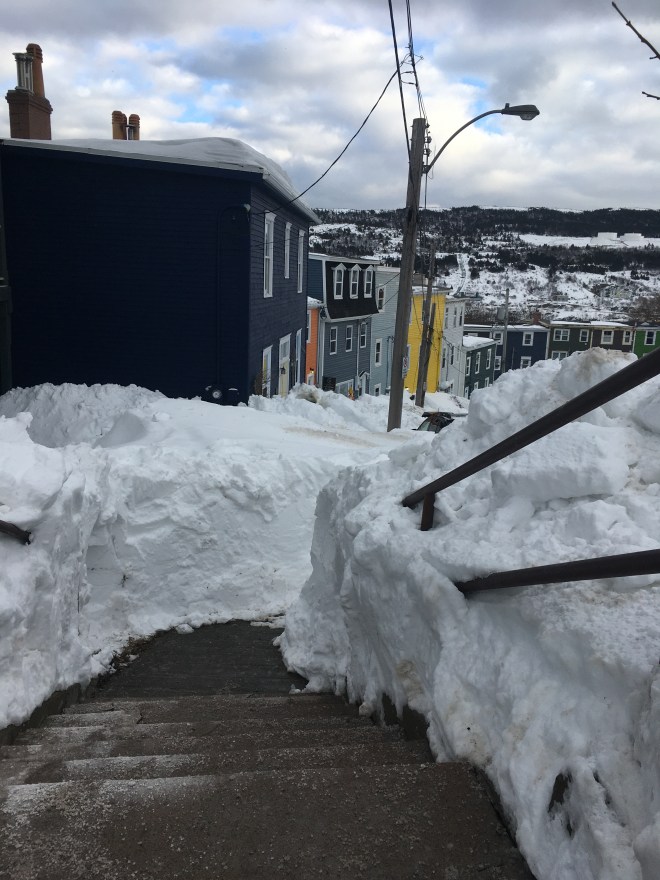
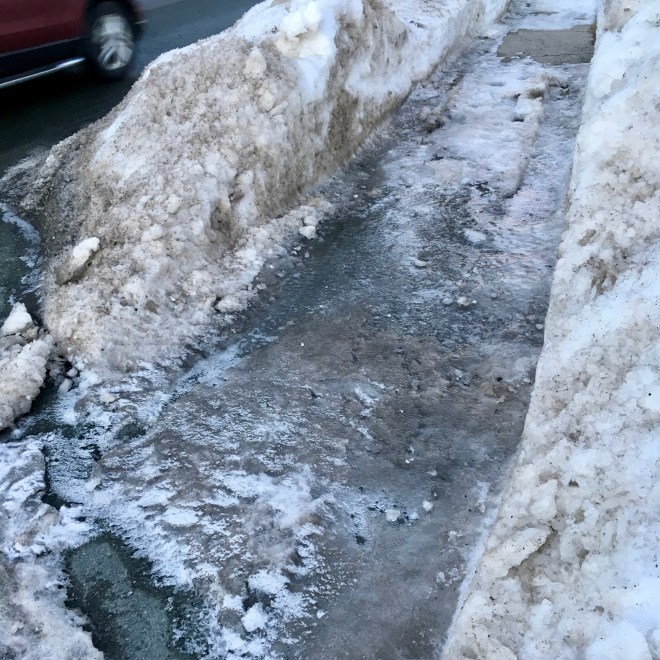
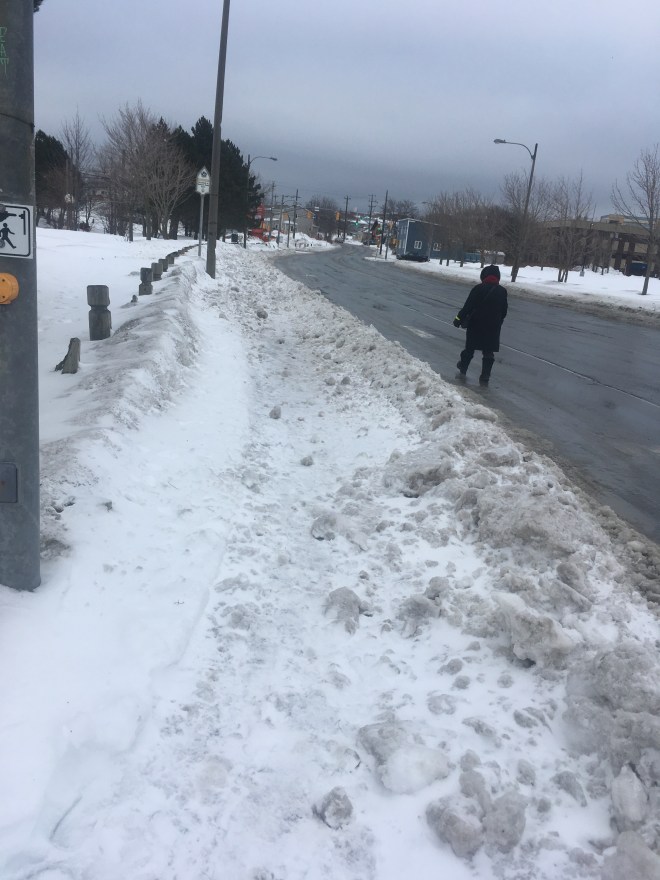
IMG_3443This photo is a year or two old. The whole area is completely buried right now after the blizzard of the century but I’m posting the photo because I added a story about it to the citizen science data gathering project designed by Matt Milner. If you have stories about your experiences getting around St. John’s in winter, especially accidents, injuries, hazards or the state of sidewalks in general, please have a look and add them to the map. Here’s the story that goes with this photo, in case you didn’t get here from Matt’s map: There’s a staircase that goes from Queen’s Rd. to Chapel St. that is always beautifully shovelled and salted yet it is truly the stairs from nowhere to nowhere because the sidewalk is never cleared on Chapel St. or that side of Queen’s Rd. It’s an example that I’m very familiar with since it’s on my route between home and work but there are others like this too. This illustrates two things: 1) the power of shovels, which might be better applied removing snow from some of the hazards documented by Matt’s project; 2) the City’s resources could sometimes be used better if the situation could be better analyzed. (Note: In the photo, you can see that it actually has been used because the snow wasn’t very deep but when the snow is deeper, it’s impossible.)

Update Jan. 24:

Even in the current state of emergency, they came and shovelled the staircase again. This time they did actually shovel a path out to the street, maybe because the depth of snow made to really clear just how futile it would be otherwise. Usually they don’t shovel a path, just leave it blocked at the bottom. Meanwhile, I was talking to a colleague who mentioned another such staircase that has even less traffic than this one but is also regularly shovelled and salted.

IMG_5748

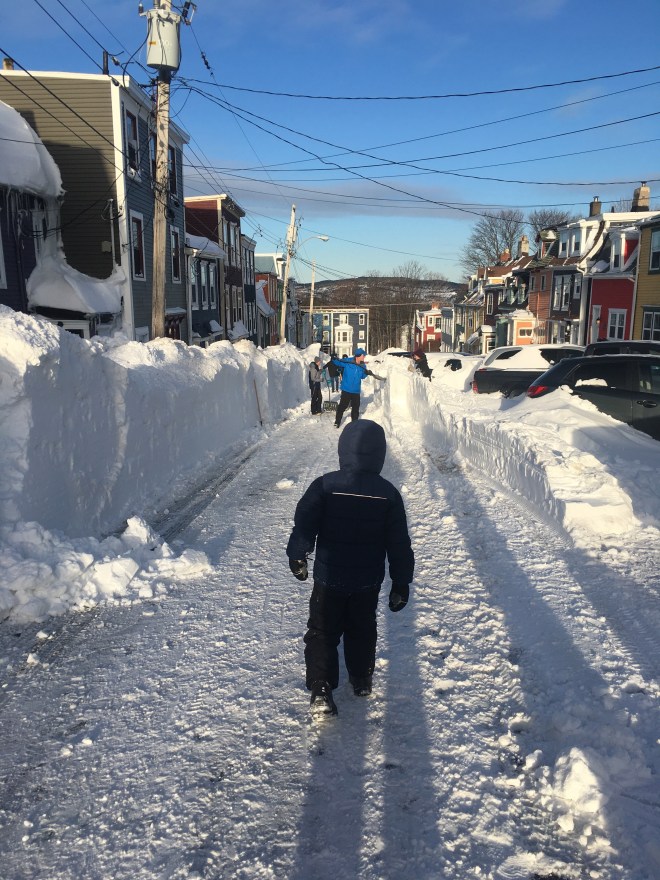
Freedom of the streets!

IMG_5714

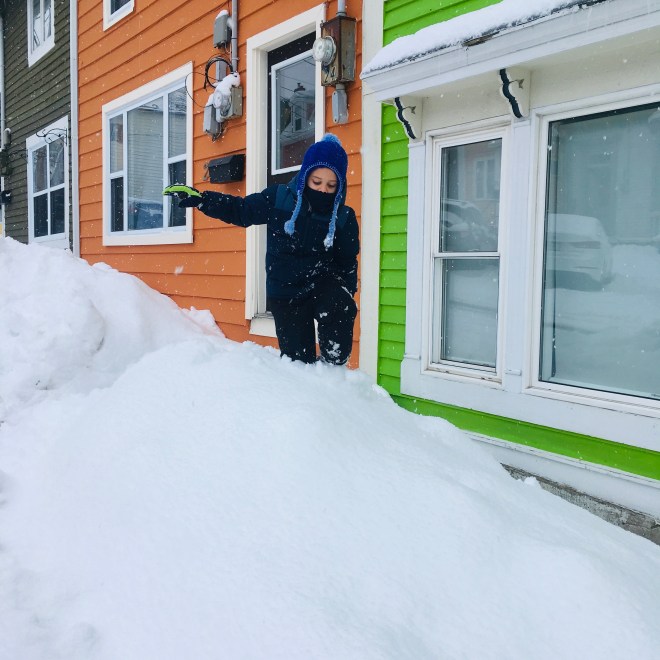
We have been under a state of emergency for two days now and the military has been called in to help clear up after the blizzard. Meanwhile, the weather has been sunny, neighbours have all been helping each other shovel out, and the streets yesterday and today were full of people walking, skiing, snowshoeing and snowboarding, enjoying the sunshine, each other’s company, and the freedom from the usual danger of getting hit by a car. For those of us who have been able to get out it has been an unheard of delight to be able to walk around without fear.

My friend, Marie Wadden, wrote eloquently on Facebook about the sense of community this engendered:

About being forced to [stay] in our neighbourhoods by this State of Snow Emergency: It’s kind of great, and makes me realize how cars strip us of community by expanding our reach so wide. My day was brightened by hearing from a more elderly friend how numerous of her neighbours have been to see her. I am making muffins for our neighbours who helped us yesterday, and I hope some new neighbours – from Angola – will take me up on an offer of a visit with us. Usually I am dashing in and out of the house to the car, hardly noticing those around me. Many have suffered from this “snizzard”, but it has this upside.

Six Years After The Consultation

IMG_5602

“Sidewalks are a fundamental element of the urban transportation infrastructure. It is bizarre that any city would fail to provide the same level of service for sidewalks that it does for roads. This makes its pedestrians second-class citizens.” (Barry Wellar, urban geographer and professor emeritus, University of Ottawa)

That really says it all. We are second class citizens. Worse than second class citizens. Our lives and our children’s lives are in danger. Just watch this video and read this description of peoples’ everyday commutes in St. John’s. We are working on a couple of protests and a citizen science update to the 2014 consultation and report on snow clearing in the city. But we already know how bad it is. We need to act.


“A Bold Ambitious Plan”

IMG_3042

Windsor Ontario has a new active transportation plan that will increase commuter trips made by walking, cycling or public transit from 10% to 25% by 2041. Brian Patterson, a consultant who advised the city called it “a very, very bold, ambitious plan.”

I suppose this is good news in a way, especially in a town that has been described as “the epicentre of the Canadian automotive industry.”

But in the context of the UN report on climate change, which predicts truly terrifying consequences if we do not limit average temperature increase to around 1.5°C above pre-industrial levels, it doesn’t seem so bold. UN Secretary General António Guterres said that reaching that goal will require “urgent and far more ambitious action to cut emissions by half by 2030, and reach net zero emissions by 2050.”

Transport is a key sector in any plan to mitigate climate change. The Windsor plan and our own efforts here in St. John’s to promote walking (scroll down, it’s at the bottom of the linked page), cycling and public transit show that there are costs involved. It will be hard in some ways. But we don’t need new inventions, research or huge sacrifices to just get out there and start doing it right now.

I read this in an article about responding to drought in South Africa. A long way from here but we are all in this together:

“‘The wound is where the light enters,’ said Rumi. Maybe we know society’s long contemporary holiday of development and self-enrichment will soon be over. Maybe more of us than admit it are sick of it, and know we can’t pay for it much longer. Maybe we know, deep down, that we will have to go back to the work of being humans embedded in nature, and not above it. Maybe parts of this will be a relief to some of us, even a joy. We might turn out to be more willing than we expect to live a harder way.” (Eve Fairbanks)


Looking After The Living World

IMG_4574

There’s a word in Innu-aimun that means the land and all the interconnected life that is apart of it. The word is nutshimit. The living world seems to be the best approximate translation we have in English. We often talk about saving the planet but the planet will be here. It’s the web of life we really want to save, including ourselves.

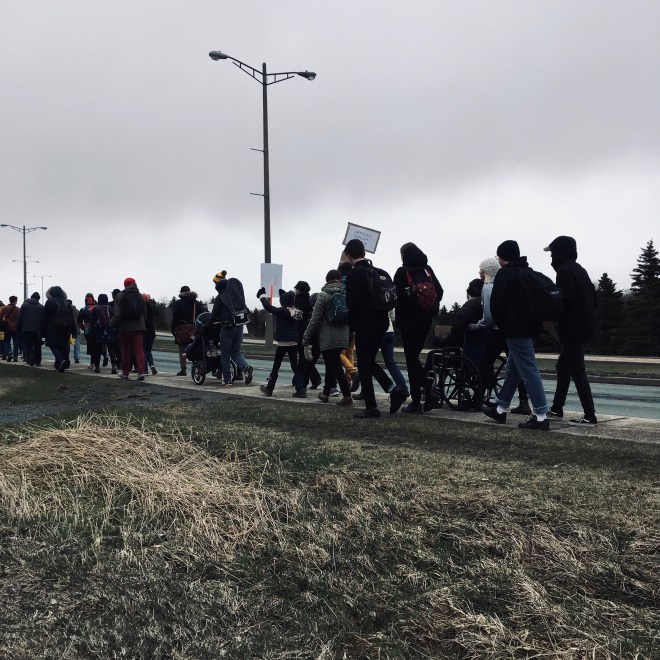
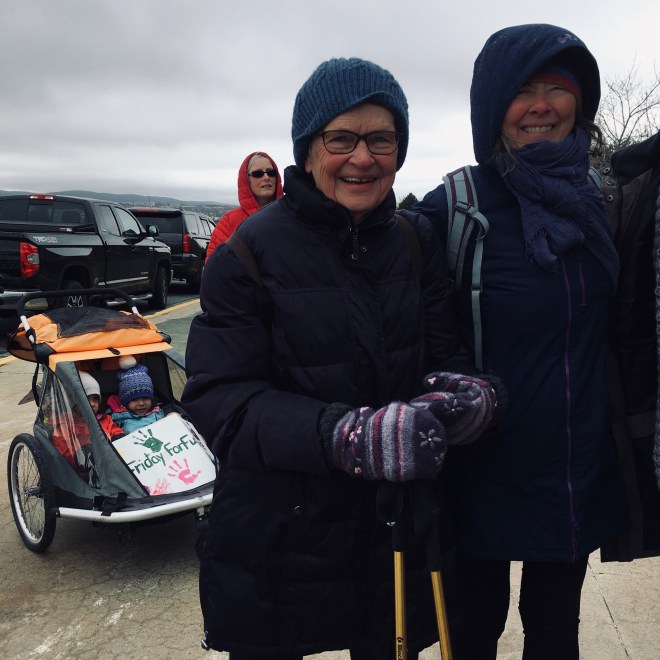
Last winter I read some articles on what scientists are telling us about climate change. You’d think we’d all know this. You’d think we’d be talking about it all the time. The information is widely available and vital for us to understand but somehow most of us are unaware of just how grave the problem is. I was until I did some serious reading. Then I panicked. I couldn’t look at my grandchildren without feeling terrified for what they will face as they grow up. It was overwhelming. I think that’s why we don’t know much about climate change or, if we do, we don’t talk about it. We can’t bear to think about it and we don’t want to upset people by bringing it up. I felt paralyzed and terribly depressed for a while after reading about it, but I gradually realized that taking action was the best way to deal with that. Last week I joined the Fridays for Future Climate Action Walk (photos above and below) and I plan to keep working on whatever I can to do something for the Living World. I’ll be posting here about things people can do and initiatives and possibilities that can make a difference.

I started this blog as a resource for active transportation and a way to tell the story of making one small city, St. John’s, more walkable and accessible. This is an important part of climate change strategy. A report by C40 Cities and the McKinsey Center for Business and Environment suggests that “enabling next generation mobility” (which includes active transportation) is one of four key areas that could help cities achieve 90 to 100 percent of the emissions reductions needed by 2030. I plan to keep working on that and am looking forward to talking about it at the Decarbonizing Newfoundland and Labrador Conference that will be held here in St. John’s July 11-12.

IMG_4579 2

The youngest and oldest strikers at the Fridays for Future walk last week.

IMG_4595


Mean Comments on a Pedestrian Injury

IMG_3407

Earlier this month, Steph Power was on her way to get the bus to work. She was crossing Barter’s Hill to a cleared sidewalk on the other side when she slipped on black ice, fell and broke her ankle. These facts have been recorded in a CBC article by Andrew Sampson. What I want to talk about here is the comments people left on the article. Steph will probably be unable to work at her job as a baker for the next two months and has experienced a lot of pain. You’d think people would have some sympathy for her. You’d also think they might wonder why it wasn’t safe to walk on a Priority 1 street. But the conversation was almost entirely about how she was wearing “hipster footware,” how they personally made better footwear choices, how there’s “always plenty of salt on that street,”  “slippery roads are a fact of life” and “there’s no way the City can keep everything cleared in winter.”

It’s always interesting to compare the way vehicle drivers and pedestrians (and their rights) are discussed. If a driver was badly injured, would all the comments be about what kind of tires they had, why they didn’t look more carefully to see if there was black ice on the road, and “too bad, it’s winter, what did you expect”? If the City suggested that some streets couldn’t be cleared and salted for cars because “there’s no way the City can keep everything cleared in winter” would that argument be accepted?

One commenter did point out that “Barters Hill is a priority one street [and] this city is well known for poorly clearing and salting sidewalks” and a couple more expressed sympathy but the large majority of the thirty-three commenters seemed oblivious to the idea that pedestrians might have any rights or that walking safely (unlike driving) is anything but an individual responsibility. I went back later to post a supportive comment but comments were closed.

I decided to have a look at some CBC reports involving vehicle crashes in winter to compare comments on them to the ones on this article. To my surprise, none of the articles I looked at allowed comments. That leaves me wondering why this story did allow them, leaving an injured pedestrian open to the mean self-righteousness of anonymous readers. Does anybody have an answer?


Meanwhile in Other Cities: Another Look at Moncton

I know I’ve written quote a lot about Moncton and I may have seen it (or at least its sidewalk snow clearing) through rose coloured spectacles. So, for the record, this satirical piece in The Manatee suggests that winter walking still isn’t quite perfect there.

“Removing the sidewalks and widening the streets will give people a better place to walk, and actually save the city money in the long run. Sure, there might be a slight increase in deaths from vehicle-pedestrian collisions, but way fewer injuries from falls and sprains. Premier Higgs told me the province will even help fund the work, because it will save the health-care system so much money.”

Participatory Budgeting

512px-Jelly_Bean_Row_(7701369614)

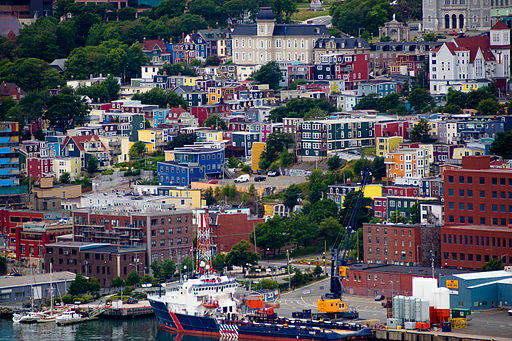
Photo: Kenny Louie from Vancouver, Canada [CC BY 2.0 (https://creativecommons.org/licenses/by/2.0)%5D

One reason I’m interested in municipal politics and activism is the seeming impossibility of making a real difference at the national level. Cities and towns seem to be taking the lead in making real change, especially in sustainability. It’s not that we shouldn’t pay attention to what’s done nationally or provincially, of course, but one of the ways smaller scale activism can make a difference is by experimenting with new approaches that might later be implemented on a larger scale if they are successful.

This review of Yves Cabannes’ edited book, Another City is Possible with Participatory Budgeting (2017, Montreal, Black Rose Books) suggests that participatory budgeting can make a real difference. When citizens have their say in developing the city’s budget, good things happen: things like community gardens and markets, accessible public space and equitable development. The book offers examples from around the world, including one from Chengdu, China, which I’m especially interested to read since we’re not used to thinking of China as a bastion of democracy. Apparently, the book is “the first in a series of books that aims to stimulate collaboration between various forms of emancipatory collective action at the municipal level.”

I’m off to order a copy of the book and would love to hear from anybody else who wants to read or has read it. I’ll also post a review later for the first in what I hope will be a series of book reviews.


A totally different story: Winter walking in St. John’s from an international student’s perspective

IMG_3507

Photos and story by Bahar Haghighat

I decided to write about this after reading Dr. Boon’s post on sidewalk clearing in Halifax. Before that, although I was aware that sidewalk cleaning in St. John’s is terrible, I thought that I shouldn’t complain because maybe that’s how it is supposed to be. It’s Canada. A cold country, with long winters and a lot of snow. When I decided to move here, I resigned myself to the fact it’s a terrible winter, but who am I to criticize when I haven’t lived here even for a decade yet?
Before coming to Newfoundland and Labrador, I had read somewhere that St. John’s is one of the most walkable cities in Canada during winter because the weather is cold, but not unbearable. And I have found it’s true. It’s been four years since I’ve arrived and, aside from those super windy days, you can walk easily if you dress properly and if the sidewalks are clear.
As an international student coming from a sunny country, it’s a challenge to survive winter here. As a grad student, it’s even more difficult to survive both grad school and winter together. At school, we discuss mental health a lot. We talk about its importance, about ways we can take care of our mood, and about how to avoid depression – especially during the long winters we experience here. We’re advised to take vitamin D, to eat properly, and to be physically active. I’m not going to talk about the accessibility of “healthy foods” here: both in terms of cost and availability, or how considering students responsible and accountable for their mental health is problematic, those are totally different kettles of fish. But I do want to talk about walking, which is considered an easy, cheap and (for myself) mind-stimulating physical activity. Walking invigorates my thinking, especially after finishing a book or an article related to my dissertation. Some of my best writing has happened when I spent time thinking and planning while wandering aimlessly through the city.
When I first moved here, (I was lucky to start school In September, can’t imagine how students who start in winter manage!), I remember walking for hours during my first month to get a sense of this place. I was amazed not only by the beautiful fall that we have here, but also by looking at colourful houses with their completely foreign architecture that I had only ever seen before in movies. By walking I’ve been able to better understand St. John’s. In little details like whether people are willing to talk to strangers or not. I was once invited to have tea with an elderly lady who was sitting on her deck and saw me walking, looking curiously at everything. I was surprised to learn that it’s not unusual for people here to keep their apartment curtains open, something that is not common back home. Walking helps me to discover cafes, bookshops, and restaurants. Walking helped me to get familiar with a new environment and to feel less afraid of being in a new place. It helped me to gain a sense of belonging during those first beautiful fall days.
But the reality is that, in general, walking in St. John’s isn’t easy. The city structure is not welcoming to walkers – at least not after growing up in Iran where the cities are full of lights, pedestrians, and spacious sidewalks that invite you to walk for hours. During fall and summer, the St. John’s weather can be beautiful and the environment can motivate you to venture outdoors – but winter is a different story. I don’t walk a lot in the winter; I’d say I don’t walk at all. When you are an international student living alone, you need to be more cautious about every single step you take in a new country. You don’t have the same social supports anymore and you try your best to avoid any complications. People tend to think of international students as adventurous people, risk takers who left their home and moved to a new country to study. People who have known me might agree with the description, but I do everything I can in my daily life to avoid risk. For many people, the commute to school requires little thought, it’s routine. But it’s not for me! In the winter, every day I have to decide if I want to walk to school or not. One of my nightmares is slipping and hurting myself. I imagine myself slipping and falling, and worry that nobody would be there to help me because nobody walks in this city of cars! I envision lying there for hours before I get help, probably by calling 911 myself; I would end up going to the emergency room which would probably take my whole day, and I might suffer a concussion, a broken hand or leg. And then I get panicked. I have no family here. Who would help me with cooking, with transportation, with bathing! I probably wouldn’t even tell my mom to save her from worrying while she’s two oceans away. After overthinking all of this, I end up taking a bus to go to school – although I live close to MUN, although I need to walk for the exercise, although I prefer to save my transportation fees. In fact, taking the bus is a risky process itself when there is no real, clean shelter at my bus stop and I’m forced to stand in the street, asking God to save me from being hit by a car until my bus arrives. That’s not to mention getting splashed by cars racing past which is not helpful when it results in a filthy outfit en route to a job interview, or the angry comments from some drivers complaining that I’m walking on the street, seemingly unaware that I am just as unhappy as they are that I had to choose between a sidewalk full of snow or a street that may have black ice. I could also mention the problems with public transportation here in general, like the times that my bus arrives ahead of schedule and I have to watch it drive away while I’m not quite close enough to catch it, but again, public transit is a whole other story. As for walking in St. John’s, I certainly won’t be highlighting the city’s “walkability” in winter when people ask me how life in Canada is going!


Priorities, plows and gender equity

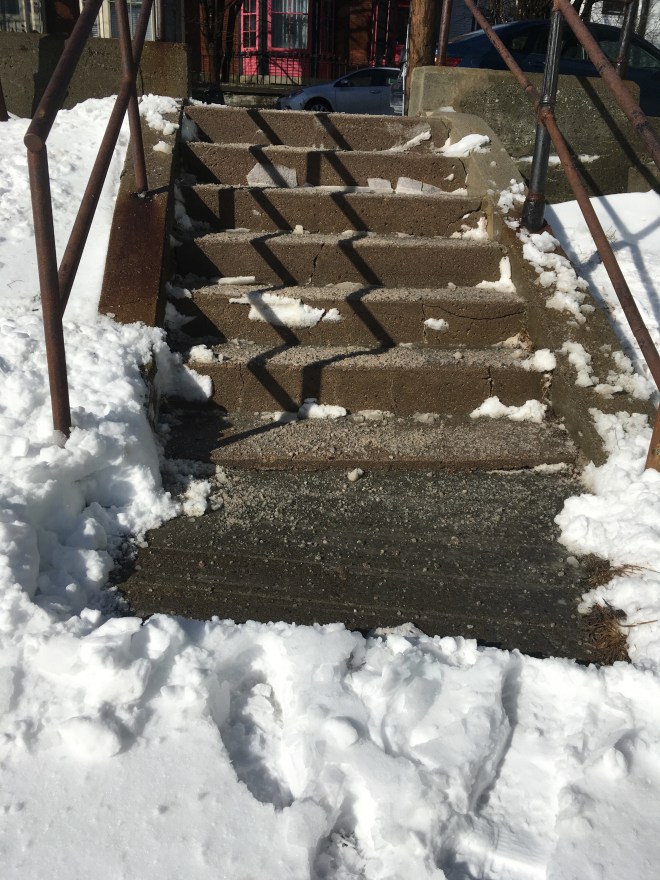
Did you know that three times as many pedestrians as drivers are injured in accidents caused by slippery conditions? Or that most of those injured are women? Is it a conspiracy or…? Have a look at this short film from Sweden to find out.

How do the priorities here compare to priorities for snow clearing where you live? Have a look on your community’s website and let us know in the comments.